

The 2026 Washington Nationals are still a black box, even as news trickles in about coaching hires and roster moves.
At 35, new President of Baseball Operations Paul Toboni isn’t just a first-time general manager — he’s the youngest top executive in MLB. At 33, the same is true of Blake Butera, Toboni’s choice as manager. In fact, Butera is the youngest MLB skipper since the 1970s.
Butera and Toboni are bringing in a young team of professionals, too:
- New pitching coach Simon Mathews is 30. He was an assistant pitching coach for the Cincinnati Reds, but this will be his first time in charge of an MLB staff.
- New assistant general manager Justin Horowitz is 34. He comes to D.C. from Pittsburgh, where he was scouting director.
- The other new assistant GM, Devin Pearson, is just 31. He held a scouting director job in Boston.
- Mike DeBartolo, the most high-profile holdover from the Mike Rizzo days, is 41.
- New bench coach Michael Johns, at 50, is the “old man” of the personnel announced so far. His only MLB experience is as a first base coach and outfield and baserunning coordinator for the Tampa Bay Rays.
Suffice to say, the Nats are going all in on new perspectives this winter. The emerging front office and field staff have young eyes and few wrinkles. We’re not leaning on grizzled old pros who have “been there before” or know “the way it’s always been done”. Time will tell whether that’s a good thing.
Breaking the mold
Considering all this, and Toboni’s well-publicized comments about building the Nats into a “development monster”, the smart money is on the Nats treating 2026 as another rebuild year. That may sound like more of the same, to fans who have been suffering through year after year of uninspired and uninspiring baseball in the nation’s capital since 2020. The win/loss record, this time next year, may look like more of the same.
But the Nats have an opportunity to make 2026 feel different than the miserable years we’ve endured since the euphoria of 2019.
Mike Rizzo and his trusty lieutenants are gone, and so should be their hoary old philosophies. Davey Martinez and his golfing buddies are gone, and so should be their indifferent, indecisive approach to managing the clubhouse.
The Nats might or might not win more games in 2026 than they did in 2025. Most prediction models would probably suggest 66 wins will be a heavy lift if, as the baseball world expects, they trade away staff ace MacKenzie Gore this winter, along with possibly other valuable pieces. (CJ Abrams and José A. Ferrer’s names have been in the rumor mill as well.)
So, they might still be bad. But that doesn’t mean they have to be unwatchable — as they have been far too often, over the past few seasons.

Checking under the hood
In 2025, the Nats led the National League in getting picked off base, while posting the NL’s second-worst success rate in stealing bases, second-highest total of times caught stealing, and second-lowest percentage of extra bases taken. Washington’s baserunning was abysmal. Abrams led the team in stolen bases with 31; no other National, on a roster loaded with some of MLB’s fastest runners, swiped 20. Jacob Young failed to parlay his 94th-percentile sprint speed into more than 15 stolen bases, while leading the NL in caught-stealing with 11.
Defensively, the Nats had the second-worst fielding percentage in the NL, with the third-most errors and the second-fewest putouts. By fielding runs above average, they were worst in the league. Abrams was statistically MLB’s worst fielding shortstop by far, rating in the 2nd percentile for range, according to Statcast. His double play partner for much of the season, Luis García Jr., was in the 7th percentile. Daylen Lile: 5th percentile. James Wood: 6th percentile. Nathaniel Lowe: 10th percentile. The less said about Keibert Ruiz, Riley Adams, Drew Millas, and Jorge Alfaro‘s combined work behind the plate, the better.
The Nats saw the third-fewest pitches per plate appearance in the NL and took the second-fewest walks. Even though in many other offensive categories, they were near the middle of the pack or even toward the top, their inability to work pitchers and get on base led to a lot of games in which they simply didn’t score enough runs.
We might as well talk about pitching, too. The Nats owned baseball’s second-highest ERA and runs allowed per game, behind only the Colorado Rockies. They gave up the second-most home runs in the NL, again behind only the Rockies, and allowed the most walks in the NL. They struck out the third-fewest batters in baseball and recorded by far the most hit batsmen.
Yes, some of this is down to talent. The average player on the 2025 Washington Nationals was simply not as good at baseball as the average player on almost every other team. There’s a good chance that fact will be as true in 2026 as it was in 2025.
But it’s not all about talent — and talent isn’t static, either. Ostensibly, the reason Rizzo and Martinez hired all of those graybeards as coaches wasn’t just so Martinez would have someone to play cards with on the team plane. A coach’s job is to get more out of their players.
What is ‘development’?
Toboni’s talk about a “development monster” might have some fans worried he’s going to focus on the minor leagues, to the detriment of the major leagues. But player development doesn’t stop at Triple-A.
Consider other major sports, like basketball and football, that rely less heavily on development leagues. A young player comes to the Washington Mystics fresh out of college. Is she expected to start playing 30+ minutes every night and rack up triple-doubles right away? And is it assumed that if she isn’t immediately a starting-caliber player, she will never, ever become one?
Even with multiple layers of minor leagues to slog through before a (typical) player is standing in a major league ballpark, the same principle applies. We were spoiled in 2018 when Juan Soto surged into the heart of the order for the Nats at age 19 and helped carry the team to its first championship title the following season. Likewise, the Athletics probably oughtn’t expect their next rookie player will repeat Nick Kurtz‘s 2025 heroics. Most of the time, young players have to master a learning curve that becomes progressively steeper at every level, the steepest being that final jump from Triple-A to The Show.
What that means is the young players who struggled at times (or all the time) in 2025 won’t necessarily struggle forever. With proper coaching, and focus, they may be able to learn, grow, and adapt — to meet and overcome the challenge of playing baseball at the highest level.
It doesn’t, and won’t, happen automatically.

Effort…
For too long, at Nationals Park, there hasn’t been any significant consequences for players, coaches, front office staff, and others who don’t put in the work they need to get to that next level.
We’ve watched too many young players jog out too many groundballs and flyballs. They’re not busting it down the line to potentially turn an out into a hit — or a single into a double, or a double into a triple. We complain in the comments section. Maybe Kevin Frandsen makes a comment about it on-air. But we don’t see anything change on the field.
Let’s be clear: A healthy 22-year-old can run hard every time he puts the ball in play. The only reason for him not to do that is that he doesn’t want to give full effort, and he knows he won’t get in trouble if he doesn’t. That doesn’t make him a bad or lazy person. But it suggests a lack of sufficient motivation.
Motivation is another thing that doesn’t just happen automatically. A baseball season is 162 games long. In most of the Nats’ recent seasons, it was obvious before they played game 1 that they weren’t going anywhere that year. When it’s game 112 or whatever out of a 162-game season, you’re five games out of fourth place in the division, it’s 95 degrees with humidity in the bottom of the sixth, you’re down 6-1, and you get into a 2-1 count before rolling over a pitch you probably shouldn’t have swung at for a routine groundball to the shortstop, where’s your motivation to run as hard as you can to first base? Is it surprising when a guy takes 90 feet off in a situation like that?
…and effect
And yet, just like those factors that drain motivation add up, so do their effects.
Players develop bad habits: poor swing decisions, bad form, only running hard when they smell a hit (and they don’t assume it’s going over the fence). Discipline breaks down, bit by bit. Every other guy on the team watching and admiring a guy like James Wood sees him taking 90 feet off, more and more, and giving away at-bats, more and more. It seeps into their own efforts. If the best guy on the team isn’t going to lock in, why should they?
Infamously, in 2015, closer Jonathan Papelbon reacted when he thought MVP-to-be Bryce Harper didn’t put sufficient effort into running out a trivial popup, in a meaningless game, late into a lost season. Maybe it wasn’t the newly acquired Papelbon’s place, in that moment, to get up in the face of the only position player on the team who didn’t have a wildly disappointing season that year. It certainly wasn’t OK for him to actually put his hands on Harper, let alone in the middle of the game, in full view of broadcast cameras.
So, yeah, there’s a right way to go about these things, and there’s a wrong way. But there’s also a reason some players sided, at least partially, with Papelbon. There’s a reason he wasn’t shown the door that offseason. There’s a reason new manager Dusty Baker described him as “a leader” the following spring.
In that moment, the message wasn’t delivered the right way. Maybe it wasn’t delivered by the right person. But the message was that even the best player on the team still has to put in the effort, even when the team stinks and the season is all but over. And that message isn’t wrong.
Getting the formula right
Notably, in Martinez’s first year as manager, Harper’s offensive stats and defensive metrics took a tumble. There was a lot of speculation that Harper was playing it safe, minimizing his risk of injury in a platform season, as he spoke openly in the media about wanting a big fat payday as a free agent. For his part, Martinez never said a word of criticism of Harper publicly. That 2018 team had 15 former or future All-Stars on it. It certainly didn’t play like it.
In 2019, Harper was gone, and Rizzo doubled down that year on veteran leadership. Seasoned players like Gerardo Parra, Aníbal Sánchez, Brian Dozier, Fernando Rodney, Yan Gomes, and future Angels manager Kurt Suzuki were brought in. (Some of them were older in 2019 than Blake Butera is today.) It took the 2019 Nationals a couple of months to click, but once they locked in, they became what Stephen Strasburg famously called a “buzz saw” that didn’t stop until they won it all.
The young players in 2019 responded well to the veteran leadership that year. Especially knowing he has a very young team and coaching staff right now, will Toboni look to bring in some older veterans? Can players like Dylan Crews and CJ Abrams step up as leaders? Can the 33-year-old Butera and his staff connect with an even younger roster of players? Again, it’s a black box. Toboni and Butera have their work cut out for them.
Inspired and inspiring baseball
Motivation isn’t only about being hard on guys. It’s also about showing them a better way.
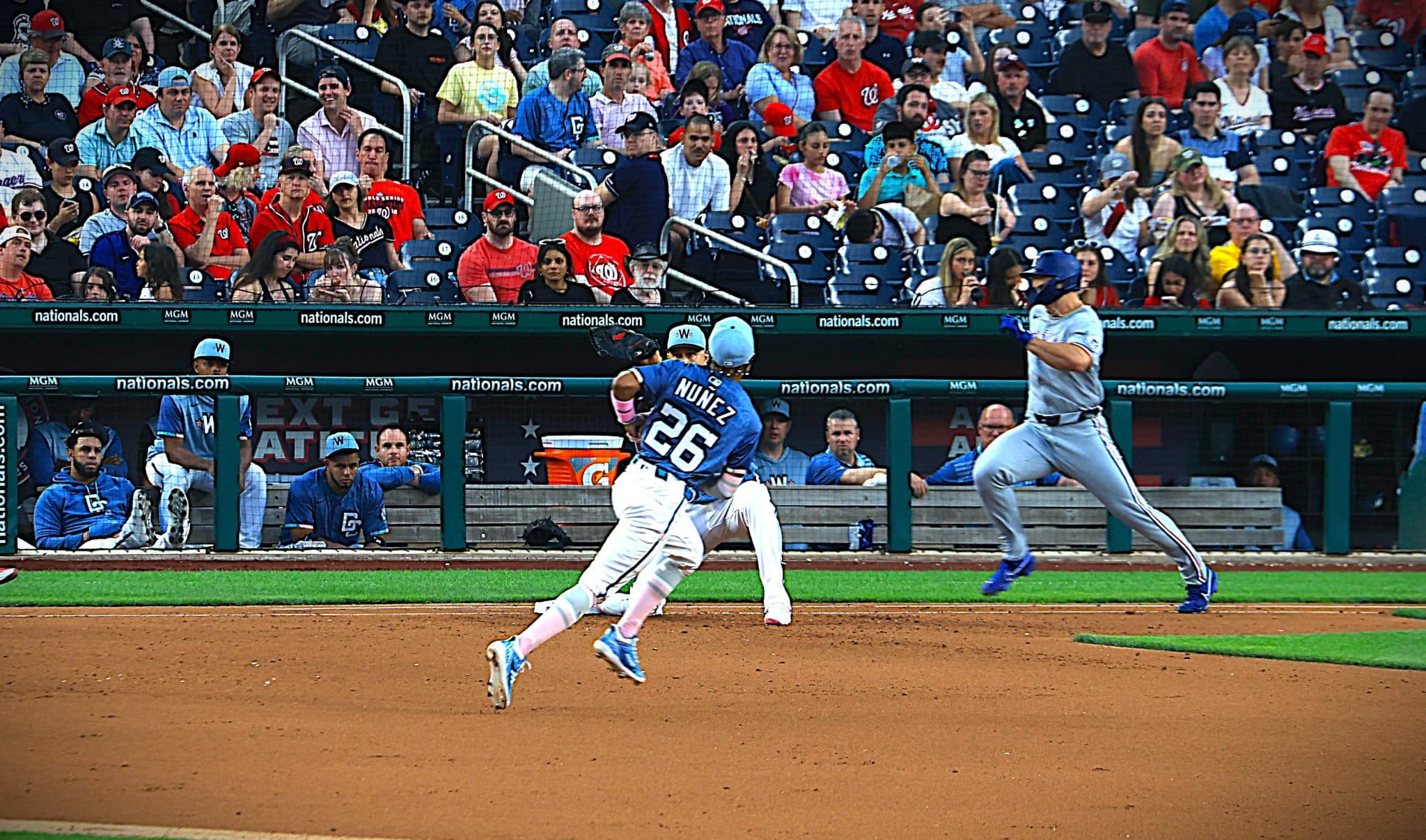
Players like Daylen Lile, Alex Call, and Nasim Nuñez last year consistently modeled max effort. They weren’t always successful. But they didn’t take plays off. And when they struggled, they buckled down and worked hard to make the adjustments they needed to make.
Lile placed fifth in NL Rookie of the Year balloting, despite playing less than half a full season. Call won the World Series with the Dodgers, delivering some of the hard-nosed, pesky at-bats that Nats fans had come to expect from him in the postseason. Nuñez earned more and more playing time down the stretch and just might have put himself in position to contend for a starting role in 2026.
These aren’t the guys on the team who had the most talent. But they applied themselves consistently, again and again, as they’ve done throughout their careers. They didn’t loaf. They didn’t pout. And the other guys on the team saw that, too.

A different team
Regardless of the source, in 2026, the motivation needs to be there, and the attitude needs to be different.
Players are going to go 0-for-4, but they shouldn’t go 0-for-4 while jogging out grounders to short. Coaches are going to struggle to fix guys who are struggling, but they shouldn’t give up on trying until the offseason. Prospects are going to go bust, but they shouldn’t all bust.
For that matter, players who are looked to as clubhouse leaders shouldn’t be letting things slide when they ought to speak up, as Crews said. The expectation needs to be everyone gives their best or it gets addressed, promptly and with consequences when necessary.
Whether Butera and his staff succeed or fail shouldn’t be measured simply by whether they can win 66+ games. It should be measured by “the little things”.
Martinez and his second-in-command Miguel Cairo talked about “the little things”, but it was all talk. Nothing improved. In fact, promising young players like Víctor Robles, Keibert Ruiz, Josiah Gray, Mason Thompson, Jake Irvin, Mitchell Parker, and James Wood regressed and/or got hurt.
What we should instead look to see under Butera is: fewer pickoffs, more extra bases taken, fewer sloppy errors, more professional at-bats. We should see players competing and trying hard, even if they don’t always succeed. When we do see signs of that insufficient motivation dragging down their efforts, we should see coaches and teammates stepping in, respectfully but firmly, to hold them to a higher standard.
For as great as it is to have talent, it takes effort to unlock that talent. It doesn’t happen automatically. It isn’t magic.
Player development means getting these guys to the next level. Motivation. Encouragement. Discipline. It’s not just about discovering the optimal pitch shape or swing path. It’s not just about analytics. The real challenge for Toboni, Butera, and their team of professionals will be accountability and credibility. These young men must become leaders of men.











Leave a Reply