
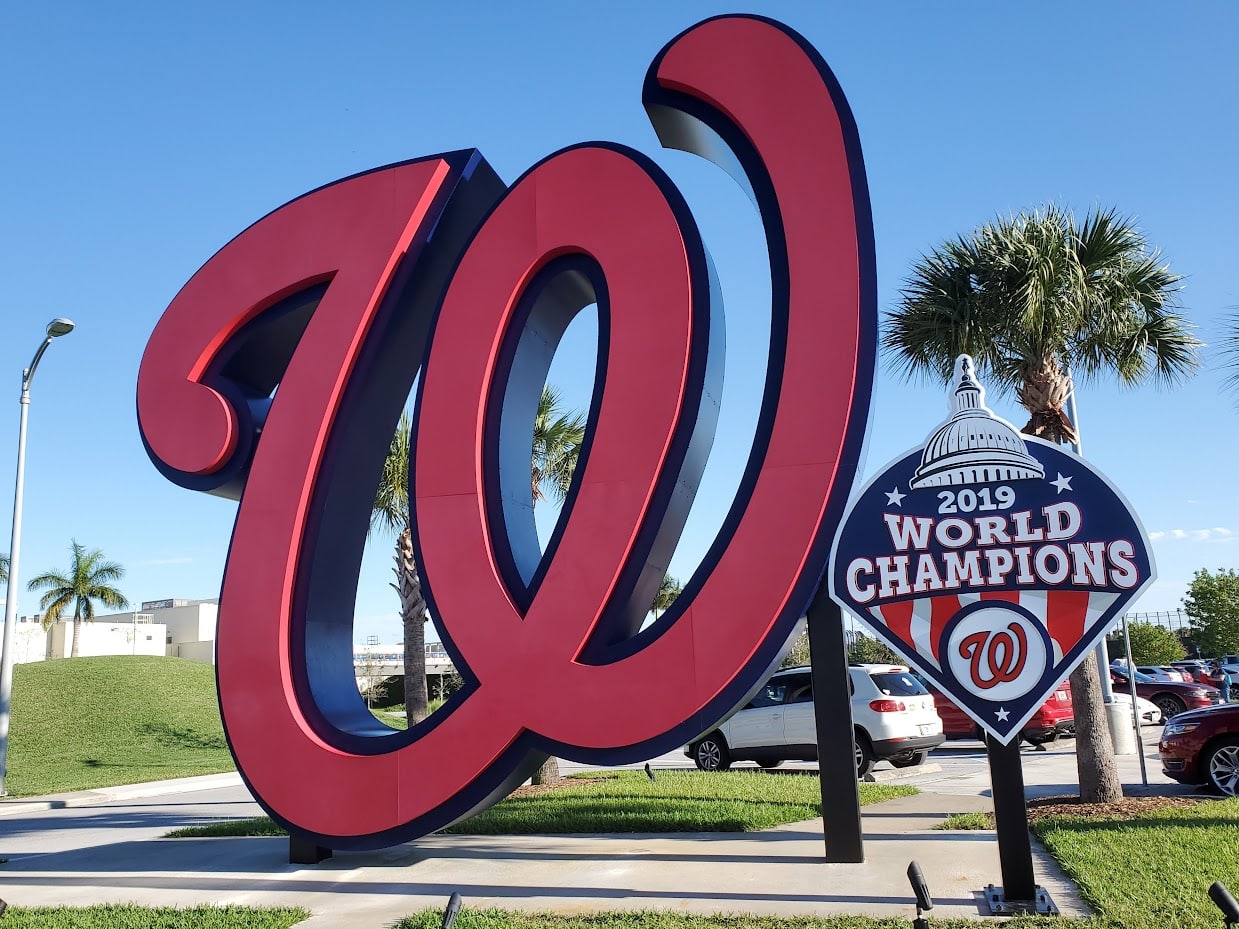

Photo by Sol Tucker for TalkNats
The Los Angeles Dodgers have spent the last two Octobers turning inevitability into routine, marching to back‑to‑back World Series titles and planting their flag as the diamond’s resident superpower. As if that wasn’t ominous enough for the rest of MLB, the champs have now doubled down on their dynasty era, mounting an all-out assault for more talent. Will they get the biggest prize in free agency and get the signature of Kyle Tucker on a contract, attempting to add one of the game’s most complete left‑handed hitters onto a lineup that was already a nightly referendum on everyone else’s talent gap. Yes, money matters, and the Dodgers are spending.
While the Dodgers hoard banners and All‑Stars, the other end of the odds board tells a very different story. The latest Bovada baseball odds make Shohei Ohtani and Co. a +260 favorite to complete the first three-peat since that storied Yankees side from the turn of the millennium. At the opposite end of the scale? Our beloved Washington Nationals, regarded as a rank +50000 outsider, have the joint-longest odds in the entire league.
So, that begs the question: What state are the Nats in heading into 2026? And which teams join them as the least fancied in the World Series odds lists next term? Let’s take a look.
Washington Nationals
Of course we start with our Nats. That stunning World Series triumph of 2019 feels like a lifetime ago (to some) in the capital. Since hoisting the Commissioner’s Trophy for the first time ever six years ago, the Nats are without a single postseason berth, and they have plummeted their way down the power rankings. The rebuild was supposed to be gaining traction by now, catapulting them back into contention as opposed to leaving them lying by the wayside. But ultimately, 2025 ended up being a treadmill year for them.
The Nationals went 71–91 in 2024 and somehow managed to get worse last season, staggering to 66–96 and a fifth straight season below 45 percent in the win column. There was a point – 28–30 on June 1 – when it looked like Washington might at least be feisty, and then the floor gave way with a 7–19 June that nuked the season and the coaching staff. By September, both Davey Martinez and Mike Rizzo were out, and the franchise that once sold itself on continuity was suddenly searching for an identity as well as a manager.
That bleakness makes James Wood’s breakout almost perversely cruel. He emerged as the one thing every bad team needs: a reason to keep the TV on, turning in a season the experts framed as the lone unqualified success on the roster. Around him, though, the rotation sagged badly – MacKenzie Gore faded in the second half, the young arms plateaued, and veterans like Trevor Williams turned from “innings eaters” into “lead donors.”
The offseason checklist is brutally simple: two credible starters, at least one bat with on‑base skills to lengthen the lineup, and a front‑office hire who can actually stick around long enough to see the next good Nationals team. Betting markets throwing +50000 on Washington for 2026 are not being mean; they are just doing the math on a club that has lost more games in 2025 than in either of the previous two seasons and still doesn’t know exactly what it wants to be.
Chicago White Sox
Even in a sport that specializes in creative losing, the 2024 White Sox were something darkly special: 41–121, the most defeats any modern team has ever managed in a single season. They were effectively eliminated from relevance by Memorial Day and spent the rest of the year chasing the wrong kind of history, finally crawling over the finish line with a record that made the 1962 Mets look competent.
That kind of humiliation tends to force a reckoning, and in Chicago, it did so without any question. The front office tore the roster down to the studs, embraced the word “rebuild” instead of dancing around it, and pointed both fans and bookmakers toward the long view – hence the +50000 “don’t even think about it” World Series price for 2026.
Here’s the twist: by late 2025, the Sox actually started to resemble a baseball team again. Chris Getz spent the year talking about “proof of concept,” and a red‑hot second half finally delivered some. The offense, which had been comically inept during the record‑setting disaster, showed real volatility instead of a numb flat‑line – still frustrating, but at least capable of short, violent bursts. Luis Robert Jr. looked like a star again when healthy, while a wave of kids gave the South Side something it hasn’t had in years: projectable upside.
That doesn’t mean 2026 suddenly turns into a pennant race – far from it. The rotation behind Garrett Crochet is a Jenga tower of inexperience and wish‑casting, and the lineup is still too light on players who grind at‑bats and reach base the boring way. The offseason priorities almost write themselves: add boringly competent arms who can survive 170 innings, find a couple of adults for the middle of the order, and resist the urge to rush every prospect just because last year’s team was historically awful. If that discipline holds, the White Sox may spend 2026 less as an embarrassment and more as the annoying young team good clubs hate seeing on the schedule.
Colorado Rockies
If the White Sox were a one‑year catastrophe, the Rockies are the long, slow horror movie. Colorado lost 103 games in 2023, 101 more in 2024, and then somehow found another level of misery in 2025, matching that loss total again on the way to one of the ugliest seasons in franchise – and maybe MLB – history. ESPN devoted an entire feature to cataloguing the creative ways they blew games, from 10‑run pitching meltdowns to stretches where they surrendered 72 runs in six games; by early September, even the general manager was admitting “we are not good right now” in public. When you live like that for three straight years, it’s no surprise bookmakers stuff you near the back of the World Series odds sheet with a fat +50000 stapled to your name.
And yet, around Coors Field, they keep talking about “process” and “growth.” Interim manager Warren Schaeffer, forced to squint at a 40–103 record in early September, leaned hard into small wins: a young starter who finally landed his breaking ball, an error‑free series, a night when the bullpen didn’t spontaneously combust. Ownership has promised a more honest rebuild after years of half‑measures, but skepticism is practically a local custom at this point, and national evaluators still park the Rockies’ farm system in the bottom third of baseball.
The offseason to‑do list is comically long. Colorado has to build an actual pitching plan for altitude – not just hope anonymous sinker‑ballers figure it out – add real impact talent to an anonymous lineup, and, frankly, convince a jaded fanbase that there’s a blueprint beyond “maybe Nolan Jones breaks out again.” The realistic 2026 hope is modest: nudge out of the 100‑loss dungeon, look like a professional outfit more often than not, and give the rest of the league a reason to treat those odds as a joke instead of a fair reflection of where this franchise stands.











Leave a Reply