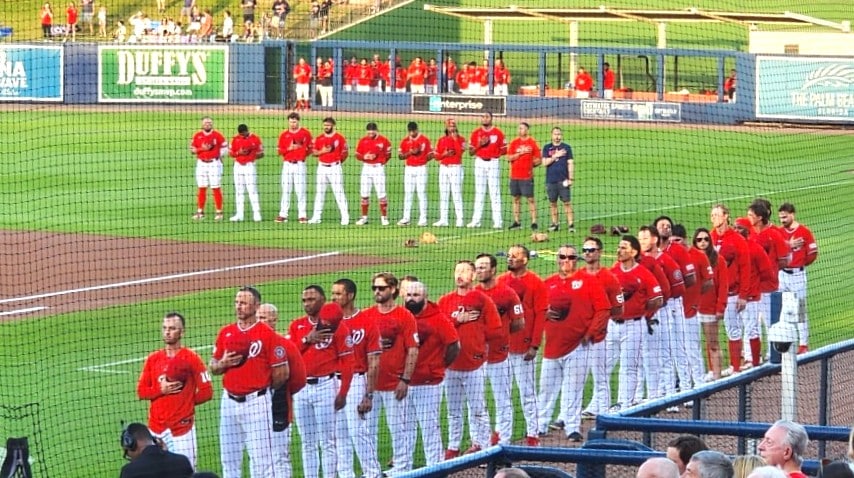

Spring Training usually brings optimism, hope springs eternal. This year in West Palm Beach, the mood feels more purposeful. The Nationals aren’t simply moving through another rebuild. This camp feels like a do-over with new ideas, new voices, and a roster searching for its next identity.
President of Baseball Operations Paul Toboni and manager Blake Butera have led this shift. Coaches are testing approaches. Players are adjusting roles. Spring Training results won’t decide the season, but the patterns forming in camp often reveal where a club believes it’s headed.
A Pitching Philosophy That’s Clearly Changing
One of the clearest changes this spring is happening on the mound. Last season, Washington leaned heavily on the fastball, leading the league in heater usage. Hitters eventually caught on and often sat on the pitch. This Spring Training we are seeing fewer fastballs. Pitching is the art of deception. Part of deceiving is not being predictable.
This camp feels different. Coaches have encouraged pitchers to mix more breaking balls and off-speed pitches, focusing on movement and deception rather than simply establishing the fastball early.
The fastball isn’t disappearing of course. Just throwing fewer. The focus is on sequencing and leaning on each pitcher’s best weapons. Cade Cavalli shows the idea in action. Fully healthy again, he’s touching 97 mph while mixing in a sharp new sweeper that hitters have struggled to square up. Cavalli said that the coaches called him on a ZOOM called and literally showed him the pitch grip on the screen. Many pitchers got similar calls and added a new pitch to their repertoire or sharpened one of the pitches they were already throwing.
Around the league, early spring matchups and projections often shape expectations for the season ahead. Baseball lines are often relied on by fans to provide information on the evolving narrative. For Washington, those early signs suggest a pitching staff trying to reinvent its approach before Opening Day arrives. It looks like three new pitcher acquisitions will be in the starting rotation with the newly acquired Zack Littell, Miles Mikolas, and Foster Griffin.
The Crews and Wood Era Is Taking Shape
The Nationals’ long-term outlook still centers on the young core that grew out of the Juan Soto trade. And the Nats farm system put the final development on both Dylan Crews and James Wood as they sit firmly at the heart of that plan, even if their paths this spring haven’t looked identical.
Crews has spent much of camp finding his rhythm again after an injury-shortened 2025. Coaches aren’t chasing big mechanical fixes when it comes to Crews, just comfort and confidence. When he settles in, the talent shows: quick hands, natural speed, and a calm presence at the plate.
Wood’s spring has been different. His 31 homers last year proved the power, but early at-bats have brought more swing-and-miss than expected. The message is simple: become a tougher out, longer at-bats, better discipline, fewer empty swings.
Experience Matters in a Young Rotation
Youth may drive the long-term plan, but the front office knows young rotations rarely carry a full season alone. That reality explains several quiet veteran additions during the winter.
Miles Mikolas arrived on a modest deal, bringing something the Nationals badly need: durability. His role isn’t built around dominance. It’s about stability, someone who can take the ball every fifth day and keep games under control.
Zack Littell fits a similar mold. Not flashy, but reliable. His presence gives the staff another experienced option while the younger pitchers continue developing.
Foster Griffin came back to MLB via playing in Japan. A similar path that got Mikolas going again in his career. Griffin hopes for the same success.
Those additions deepen the competition. Josiah Gray’s return adds intrigue, while Mitchell Parker and Jake Irvin push for roles. Brad Lord could certainly go to the bullpen. Cavalli should be at the top of the rotation. Many decisions are tied to the broader Nationals storylines that could define the 2026 season and the balance between development and competitiveness.
Quiet Work Happening in the Bullpen
Bullpens rarely draw much attention in March, but inside Nationals camp, the group has been a quiet focus without a lock at the closer spot. Last season’s relief corps could look dominant one night and unravel the next, so the organization has spent this spring looking for steadier options — but they failed to spend on a big name closer that they could flip at the trade deadline.
Several arms have stood out. Cionel Perez has flashed upper-90s velocity with a sharp slurve, Drew Smith has shown solid command, and of course there is Clayton Beeter and Cole Henry.
The theme is versatility. Washington wants relievers who can bridge innings and handle multiple situations instead of strict roles. Fans comparing bullpen trends often turn to comprehensive MLB team overviews for context on how staffs across the league are taking shape.
What This Spring Might Mean for the Season Ahead
Spring Training can mislead too often. March standouts often fade once real games begin. Still, the direction of this Nationals team is becoming clearer. The organization is leaning into youth while reshaping how pitchers attack hitters and how the lineup approaches at-bats.
Expectations around the league remain cautious, though some see real upside if the young core develops quickly. For now, the view from West Palm Beach feels simple. The Nationals are still figuring themselves out, but the foundation of the next era is starting to appear. Optimism today will hopefully still feel the same a few months from now when the sample sizes are large enough to see what the 2026 Washington Nationals are as a team.
Leave a Reply