
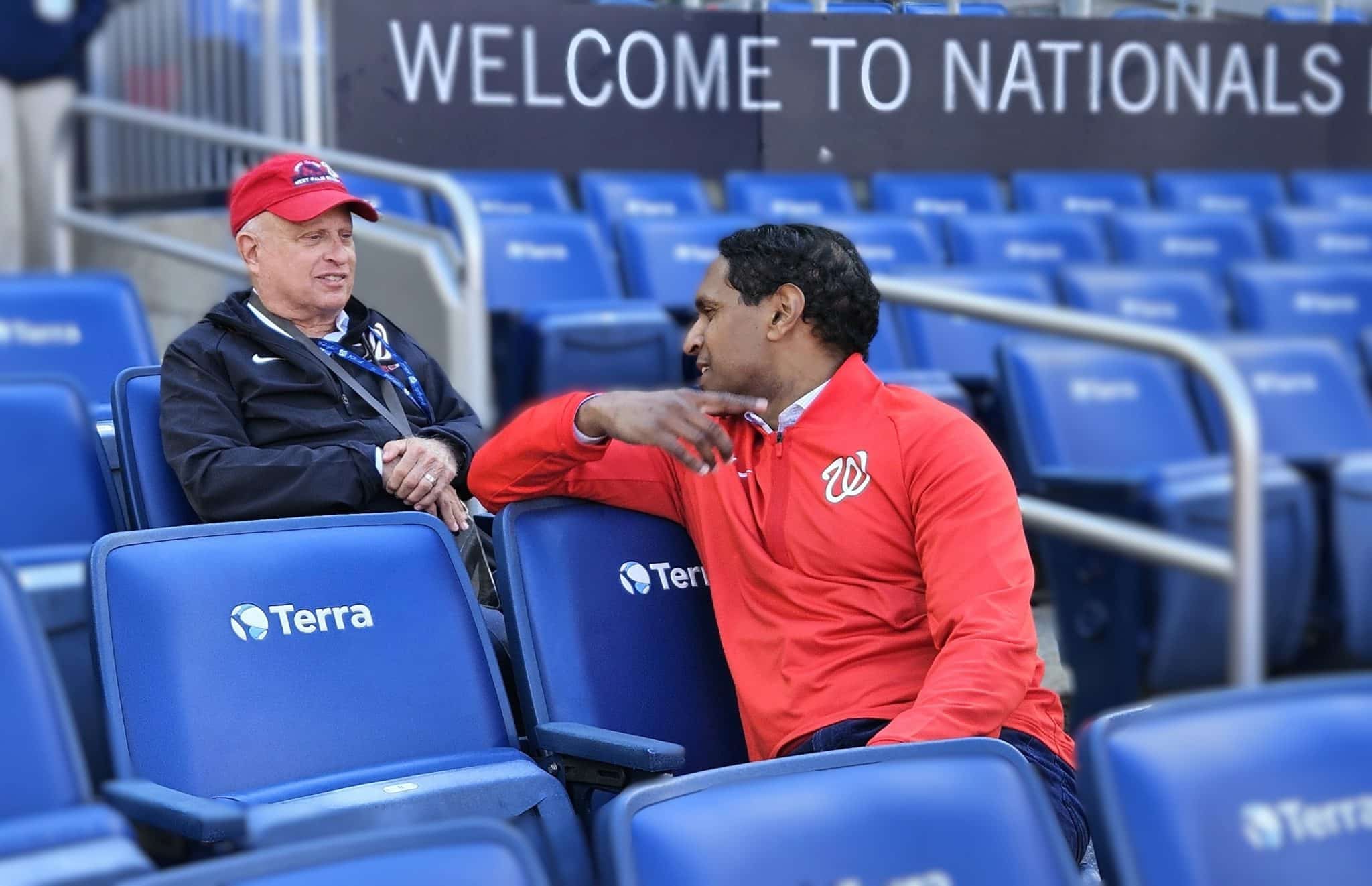
There is a circular co-dependency between revenues and spending in sports. Some would ask, what comes first in a chicken and the egg scenario? The simplistic answer is you spend with the hopes that revenues increase enough to cover the new levels of spending, and as a result, winning increases. And you curtail spending when winning turns to losing. It is a vicious cycle.
There are several areas for revenue growth. And in the coming months, the largest revenue growth could come from TV parity whereby all local and national TV money would be split equally amongst all of the MLB teams in a 1/30th split. Currently, only the national TV contracts with MLB are split equally between the teams, and the local RSN revenue is kept by the teams. Also part of the current CBA calculation is the local RSN revenue is subject to the revenue sharing model. And that model needs to changed in the new CBA.
The Washington Nationals are exempt from receiving revenue sharing. The four largest parts of the revenue model are:
- Attendance, Parking, F&B, Merch, etc.
- TV money — local RSN and national MLB split via TV contracts (with Fox, TBS, and the new 2026–2028 package consisting of ESPN, NBC/Peacock, and Netflix) generate roughly $1.8 billion annually with $60 million to each team. The Nationals RSN money with Nationals.TV is thought to be under $40 million.
- Stadium naming rights and corporate sponsorships. While the Nationals have corporate sponsorships from Terra that reportedly has expired, they have corporate sponsors you can see all over the stadium from PNC Bank to Verizon to FIS to MGM to Inova to Pedigree. There are dozens of other corporate sponsors if you look on the signage around the stadium. But there still isn’t a stadium naming rights sponsor. That has a value of $15 million +/-.
- Jersey patch sponsorship. The Nats took their sweet time to sell the jersey patch sponsorship and finally sold that to AARP in mid-2025.

The Washington Nationals attendance fell nearly 1,000 fans per game from last year. That is not good especially considering that the team had a winning record for several weeks during this 2026 season. The franchise low was 2021 due to the COVID shortened season. But in a non-COVID season, 2009 was the low point, and this season only beat that mark by 21,890 (270 per game).
If attendance driven revenue that feeds into parking, F&B, and mech is worth $50 per fan, then using 2010→2011 growth of 112,000 would be worth over $5.5 million. The 2011 number is significant as the team signed Jayson Werth in that offseason. And sponsorships usually will also increase when winning returns and the sentiment is positive.
In business, you often have to spend money to make money. That business axiom has been around for centuries. But most businesses don’t stay viable if they continue to spend beyond their revenues.
- The Revenue → Spending
- The Spending → Revenue
The reason why spending and revenue is intertwined is because you spend more to win more games, and winning usually increases attendance. Some think it was the economy as 17 MLB teams had lower attendance from 2025 to 2026, however 13 teams increased attendance including teams like Miami, the Angels, and the Mariners. As you read the chart, the Nationals fall-off was even larger as they only had attendance for 80 games in 2025.
| Team Name | 2025 Attendance | 2026 Attendance | Attendance Change |
|---|---|---|---|
| LA Dodgers | 4,012,470 | 4,034,219 | +21,749 |
| San Diego Padres | 3,437,201 | 3,347,081 | [-90,120] |
| Toronto Blue Jays | 2,849,935 | 3,338,878 | +488,943 |
| NY Yankees | 3,392,659 | 3,297,154 | [-95,505] |
| Philadelphia Phillies | 3,375,477 | 3,230,531 | [-144,946] |
| Chicago Cubs | 3,017,983 | 2,969,583 | [-48,400] |
| Seattle Mariners | 2,538,053 | 2,880,225 | +342,172 |
| San Francisco Giants | 2,925,823 | 2,856,810 | [-69,013] |
| Boston Red Sox | 2,776,496 | 2,827,315 | +50,819 |
| Atlanta Braves | 2,903,167 | 2,800,446 | [-102,721] |
| Milwaukee Brewers | 2,650,089 | 2,788,933 | +138,844 |
| NY Mets | 3,182,052 | 2,712,120 | [-469,932] |
| LA Angels | 2,615,506 | 2,631,919 | +16,413 |
| Houston Astros | 2,727,877 | 2,472,118 | [-255,759] |
| Texas Rangers | 2,397,071 | 2,406,217 | +9,146 |
| Detroit Tigers | 2,413,442 | 2,322,853 | [-90,589] |
| Arizona Diamondbacks | 2,393,973 | 2,288,586 | [-105,387] |
| Colorado Rockies | 2,404,613 | 2,245,426 | [-159,187] |
| St. Louis Cardinals | 2,250,007 | 2,233,902 | [-16,105] |
| Cleveland Guardians | 2,051,360 | 2,001,415 | [-49,945] |
| Cincinnati Reds | 2,157,413 | 1,991,703 | [-165,710] |
| Chicago White Sox | 1,405,702 | 1,986,425 | +580,723 |
| Washington Nationals | 1,916,768 | 1,839,116 | [-77,652] |
| Baltimore Orioles | 1,803,655 | 1,829,252 | +25,597 |
| Minnesota Twins | 1,768,718 | 1,740,366 | [-28,352] |
| Pittsburgh Pirates | 1,525,025 | 1,706,229 | +181,204 |
| Kansas City Royals | 1,748,808 | 1,527,058 | [-221,750] |
| Tampa Bay Rays | 786,750 | 1,414,975 | +628,225 |
| Miami Marlins | 1,156,427 | 1,221,018 | +64,591 |
| Oakland Athletics | 768,464 | 799,240 | +30,776 |
There is a symbiotic relationship with the division presidents at the Washington Nationals. Ownership created two new positions, one for the baseball operations side and another on the business side, they hired Paul Toboni and Jason Sinnarajah respectively as division presidents.
By separating these domains for the first time into two distinct presidencies but aligning them under a unified long-term vision, the Nationals ensure that business decisions directly fuel the baseball product with the hopes that it drives business growth.
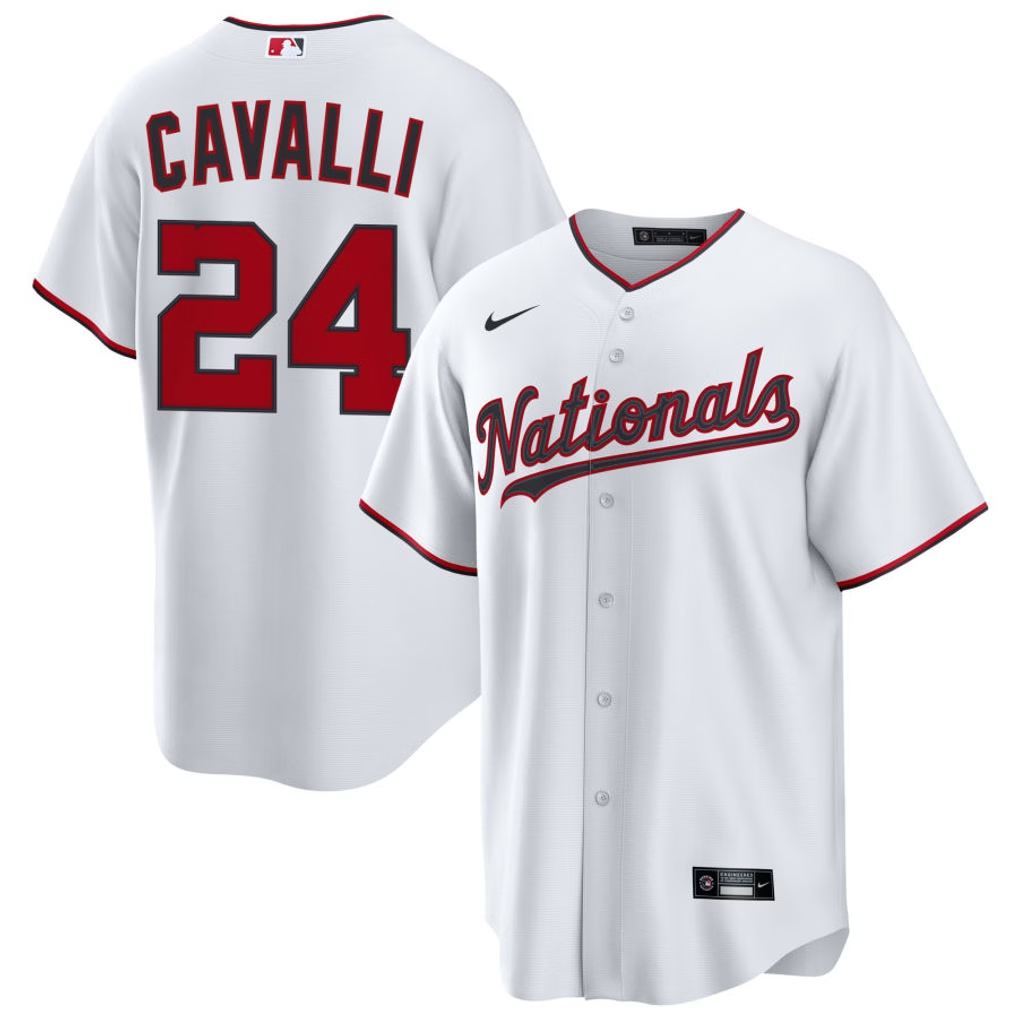
If Cade Cavalli‘s new contract extension is an indication of more spending to come, shouldn’t the Nationals or Toboni do a better job of marketing the positives of that? You have to believe Sinnarajah’s people are singing the praises of that deal to potential season ticket holders and corporate sponsors — but if those people read Barry Svrluga’s article today, they might be scared off by the negativity. Here are excerpts from that article (Note: Subscription Required):
What’s left of a withering and beaten-down fanbase is watching, and it’s fair for each and every would-be season-ticket holder to say, “Look, I’m not getting out our checkbook unless you get out yours.”
If the Lerner family spends some money. It’s the biggest “if” in Washington sports, and nothing short of the faith of a fanbase hangs in the balance.
A little dramatic Barry. That isn’t the biggest “if” or even close to it in Washington sports. The biggest “if” is Jayden Daniels health.
Even with the Cavalli deal announced last week, there are several articles out today in the Natmosphere that are back on the “Lerners must spend!” bandwagon, and you no where that leads the commentors: The Lerners are Cheap. That’s also a vicious cycle.
Don’t we all want spending? Absolutely. But you also need smart spending. Why do the same writers have to pump out the same message in every feature article?
Two offseasons ago, the Nats GM had over $50 million to spend and all of that money went out the door — and most of it was wasted. There’s always risk on spending, but five of the nine signings ended up in negative WAR.
This all goes to how you spend the money not how much you have to spend. The Mets are the case and point of that. They spent over 300 percent of what the Nationals spent this season, and the Mets won fewer games than the Nats.
“Wherever the roster could benefit, most from either internal development or promotions or trying to go out and sign players that play those positions,” president of baseball operations Paul Toboni said in his final media in-season session “obviously, we’re gonna be super open-minded on it.”
Let’s state the obvious, if the CBA has a spending floor, the Washington Nationals will be forced to spend. None of those other articles we read made any mention of that.
For now, we have to wait and see what Toboni and Sinnarajah do leading into the offseason. It’s hard to sell stadium naming rights when businesses are concerned that there can be a work stoppage and a cancelation of the season. It’s harder to sell tickets and sponsorships with swirling negativity. At some point you have to change the narrative to the positive. You just finished a very good season of progress.
To me, the future looks promising and the window is open.












Leave a Reply