
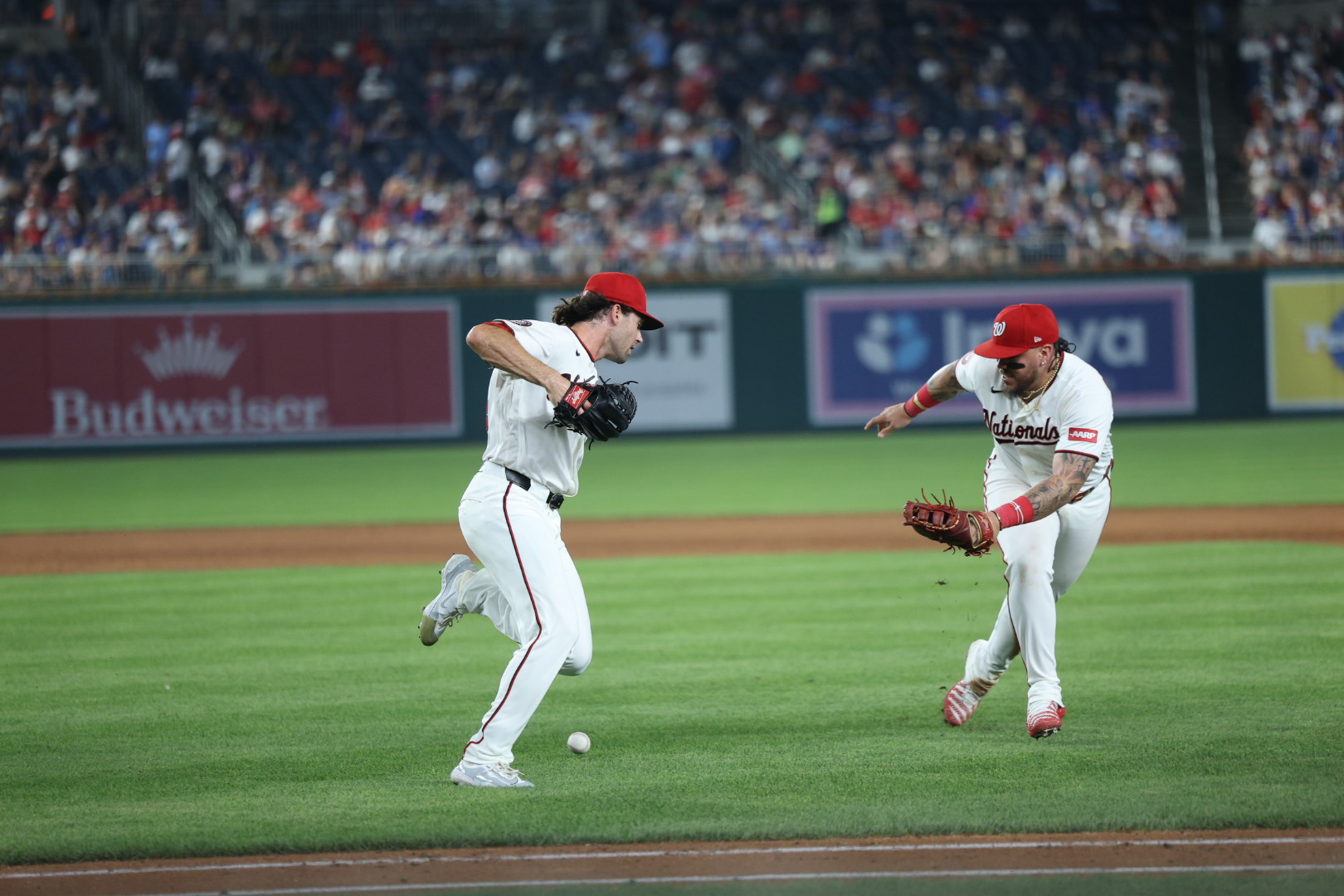
Baseball is an unpredictable sport, and anyone who has watched enough of it knows exactly what that means. You’ve heard before that “Defense Matters.” You can have the best lineup in the league and still lose on a night when three grounders sneak through the infield. You can carry an ace on the mound and watch him get burned by two misplays in the fourth. Leads evaporate. Sure things turn into losses.
Just look at Monday’s Yankees game with their three errors in the beginning of the game. The game has a way of humbling everyone involved, from the front office down to the last man on the bench.
For this reason, baseball is one of the most popular sports to wager on. The margins are tight, the variables are many, and the outcomes are rarely guaranteed. If baseball betting enthusiasts go to thespike.gg/betting to view more, or any other reputable betting review site for that matter, they will quickly see that the most established sportsbooks offer detailed coverage of professional baseball matches from leagues around the world.
But when it comes to the game itself, it is worth stepping back and thinking about the defensive side, specifically, what happens in the first six innings. Most fans track offense, watch home run totals, and follow ERA leaderboards. Far fewer pay close attention to the defensive metrics that shape outcomes long before the bullpen gets involved. Those numbers, however, often tell the real story of a baseball game.
Why the First Six Innings Can Set the Tone
The common narrative in baseball places heavy emphasis on late-inning drama: the closer, the setup man, the pinch-hit situation in the eighth. But games are won and lost well before that moment arrives. The first six innings are when starting pitchers operate, team defense is most tested, and run prevention either holds firm or breaks down.
When a team allows three unearned runs in the first four innings due to poor defensive positioning and misplayed grounders, no late-inning relief outing can fully compensate. Those runs are already on the board. The damage is done. This is why evaluating defense through the lens of early-inning performance gives a far more complete picture of a team’s ability to win games, not just compete in them.
A team that plays clean defense through six innings puts its offense in a position to work with. One that gives up extra outs through errors or poor range forces its offense not just to score, but to outscore. Those are two very different situations, and they show up clearly in the standings by October.
Outs Above Average: The Most Direct Fielder Metric
Of all the defensive statistics available today, Outs Above Average (OAA) is one of the clearest and most actionable on this site. Developed by Statcast, OAA measures how many outs a fielder successfully converts compared to the expected number based on the difficulty of each batted ball. It accounts for sprint speed, route efficiency, catch probability, and the specific angle of approach, essentially everything a traditional fielding percentage ignores.
What OAA Covers by Position:
- Infield (2B, SS, 3B, 1B): Measures horizontal and vertical range, first-step quickness, and the ability to throw accurately after difficult plays
- Outfield (LF, CF, RF): Tracks jumps off the bat, routes taken, and the depth of balls successfully tracked down
- Catcher: Separate blocking and framing metrics inform this position’s defensive evaluation
Players who consistently rank in the top tier of OAA are not always household names, but their contributions show up in their team’s run-prevention numbers all season long.
Ultimate Zone Rating: Range in Context
Ultimate Zone Rating, commonly known as UZR, is an older but still widely referenced defensive metric that estimates how many runs above or below average a fielder saves over a season. Where OAA focuses on individual plays, UZR adds a run-value context that helps compare across positions and time periods.
UZR breaks down into four components:
- Outfield Arm Runs (ARM): Measures how well outfielders prevent runners from advancing
- Double Play Runs (DPR): Tracks how effectively middle infielders turn two
- Range Runs (RngR): Quantifies how much extra ground a fielder covers compared to an average player at that position
- Error Runs (ErrR): Calculates the run value of errors committed relative to league average
What makes UZR useful in the context of early-inning defense is that Range Runs specifically reflects a fielder’s ability to get to balls that other players simply would not reach.
Defensive Runs Saved: The Team-Level View
Defensive Runs Saved (DRS) works differently from OAA and UZR because it works effectively at both the team and individual levels. DRS translates every observed defensive play into a run value, positive or negative, and sums them across a roster.
For early-inning performance specifically, team DRS in the first six innings is one of the cleaner ways to evaluate how well a team’s defense supports its starting pitching. A starting pitcher with a 3.50 ERA is, in most cases, getting some level of help from his defense. How much? DRS helps quantify it.
Teams that post strong team DRS numbers through the first six innings of games tend to:
- Allow fewer walks-plus-hits-per-inning-pitched (WHIP) to their starters, because difficult balls get converted
- Limit multi-run innings caused by defensive breakdowns
- Preserve leads entering the seventh inning at a higher rate
- Place less pressure on the bullpen from the start
Double Play Rate: Erasing Trouble Before It Escalates
Nothing stops a first-or-second inning rally faster than a 6-4-3 double play. The Double Play Rate (DP%) measures how frequently a team converts double play opportunities (defined as a ground ball with a runner on first and fewer than two outs) into two outs.
This metric directly reflects infield range, footwork, arm accuracy, and middle-infield communication. A team with strong DP% routinely bails its pitchers out of jams. A team that fails to convert those opportunities regularly gives the opposing offense second life.
For a starting pitcher already managing pitch count, turning a 1-out, runner-on-first situation into a double play is as valuable as striking out the next two hitters.
Key components of a strong double play unit:
- A shortstop with above-average range and transfer speed
- A second baseman who can straddle the bag cleanly while avoiding incoming runners
- A first baseman with the athleticism to scoop off-target throws
- A catcher calling pitches that induce ground ball contact
Teams that intentionally build around ground ball pitchers, those with high grounder rates (GB%), benefit disproportionately from having strong double play infields. The combination multiplies the run-prevention value of both the pitcher and the defenders behind him.
Defensive Efficiency: Turning Contact Into Outs
Defensive Efficiency (DEF%) is an older team-level metric but remains one of the most straightforward to understand. It simply measures the percentage of balls in play that a defense converts into outs.
The league average fluctuates around .690 to .705 depending on the season, and teams above that threshold consistently rank among the better defensive units in baseball.
What makes Defensive Efficiency particularly relevant in early innings is that starting pitchers tend to allow more balls in play than late-inning relievers. A starter over six innings might induce 15 to 18 batted balls, while a closer pitching one inning might induce six or fewer. That means the defense behind the starter has more opportunities to either contribute or cost him runs.
A high DEF% through six innings means a starting pitcher’s actual ERA comes closer to his expected ERA based on contact quality. A low DEF% means batted balls that should become outs become singles instead, and single-to-double-to-run progressions define most early-inning scoring.













Leave a Reply