
Nobody wants to be judged by their worst day even if they committed a heinous crime or something on that level of terrible. In sports, people live and die with every play — and the fall-out can ruin your life if you are living and dying like a gambler.
In every sport, there is a name that a city like Buffalo can’t say without pain until they win a championship. Yes, Scott Norwood is that name. We said it. Forever thought of as “Mr. Wide Right.” His infamously missed 47-yard field goal in the closing seconds of Super Bowl XXV served as the direct inspiration for the fictional kicker Ray Finkle in the 1994 movie Ace Ventura. By the way, Norwood still lives in the DMV and praying for a Bills’ Super Bowl win.
Scapegoats in sports don’t even have to be the players. You could be blamed for interfering with a foul ball known as a “Bartman” or made into a hero by interfering with a potential out, like a pre-teen Jeffery Maier 10 years after Bill Buckner‘s E3 in Game 6 of the 1986 World Series that crushed Boston’s hopes at the time.
For Bartman and Buckner, they received death threats. Buckner was released by the Red Sox the following year, and Bartman went into hiding. Many athletes in the age of social media receive threats. What has happened to society? The word “fan” is short for fanatic.
Add gambling to the equation, and the behavior has led to an increase in toxic behavior. The anonymity on the internet has added to the issues that fortunately Buckner, Norwood, and Bartman didn’t have to endure due to their moments were before Twitter and Instagram. Think about how much worse their lives would have been. Ask Marcus Rashford, Jadon Sancho, Bukayo Saka, and Loris Karius what their lives were like as footballers in Europe in the social media era when fans blamed them for losses.
Several prominent MLB players and their families have been targeted with explicit death threats. This issue has become increasingly acute, as confirmed by an expansive The Athletic player poll where 81 percent of surveyed MLB players reported being harassed or threatened by disgruntled fans and sports bettors over game outcomes.
Both sports and gambling trigger dopamine releases in the brain. When combined, the highs are ecstatic, but the crashes are severe. When a bettor is riding a losing streak, the desperate urge to “chase losses” can impair the prefrontal cortex — the part of the brain responsible for rational decision-making — leading to reckless, erratic, and seemingly irrational behavior.
The timing of an error adds to its significance. There are errors all the time — and in the biggest moment, one error that happens in late October isn’t the same as if it happened in April. Just ask Trent Grisham in the 2019 Wild Card against the Washington Nationals. He was traded a month later by the Brewers. Errors are a game of inches sometimes or due to an unlucky bounce.
As years passed, Buckner turned that error into a money making venture. He would sign autographs, mostly for Mets fans who wanted dual signed baseballs with Mookie Wilson. Even TV appearances in comedy for Buckner turned his negative into a positive. That’s how you capitalize on a error.
Much of the pain for Buckner was eased when the Red Sox finally won a World Series in 2004. Buckner passed away days after the Nats 19-31 curse turned into a blessing in May of 2019. The Cubs won over a decade after Steve Bartman’s foul ball fiasco, but he never wanted to accept money even though promoters wanted him to sign autographs for a lot of money. The Cubs tried to make it up to him by giving him a World Series ring.
What about front office errors? You know, the trade that you regret for the rest of your life. For years, the Frank Robinson trade from Cincinnati to Baltimore was considered one of the worst trades ever. People internalize those deals that begin legendary flops.
Most baseball fans don’t know the name Zack Scott. Probably sounds familiar, right? He worked for several years with Paul Toboni in the Red Sox front office and was Toboni’s boss for a few years before Scott left for the New York Mets at the end of 2020. That’s where things got interesting in the annals of Mets debacles.
Some quick history, Jared Porter replaced Brodie Van Wagenen as general manager of the New York Mets in December of 2020. A few days later, Porter hired Scott away from the Red Sox and named him as an Assistant General Manager. Coincidentally, they both worked with Toboni through 2015 before Porter left to go to the Cubs. After Porter went to the Mets, he was quickly fired following a scandal that surfaced. Scott was named the interim-GM for the 2021 season weeks after he was hired as an AGM.
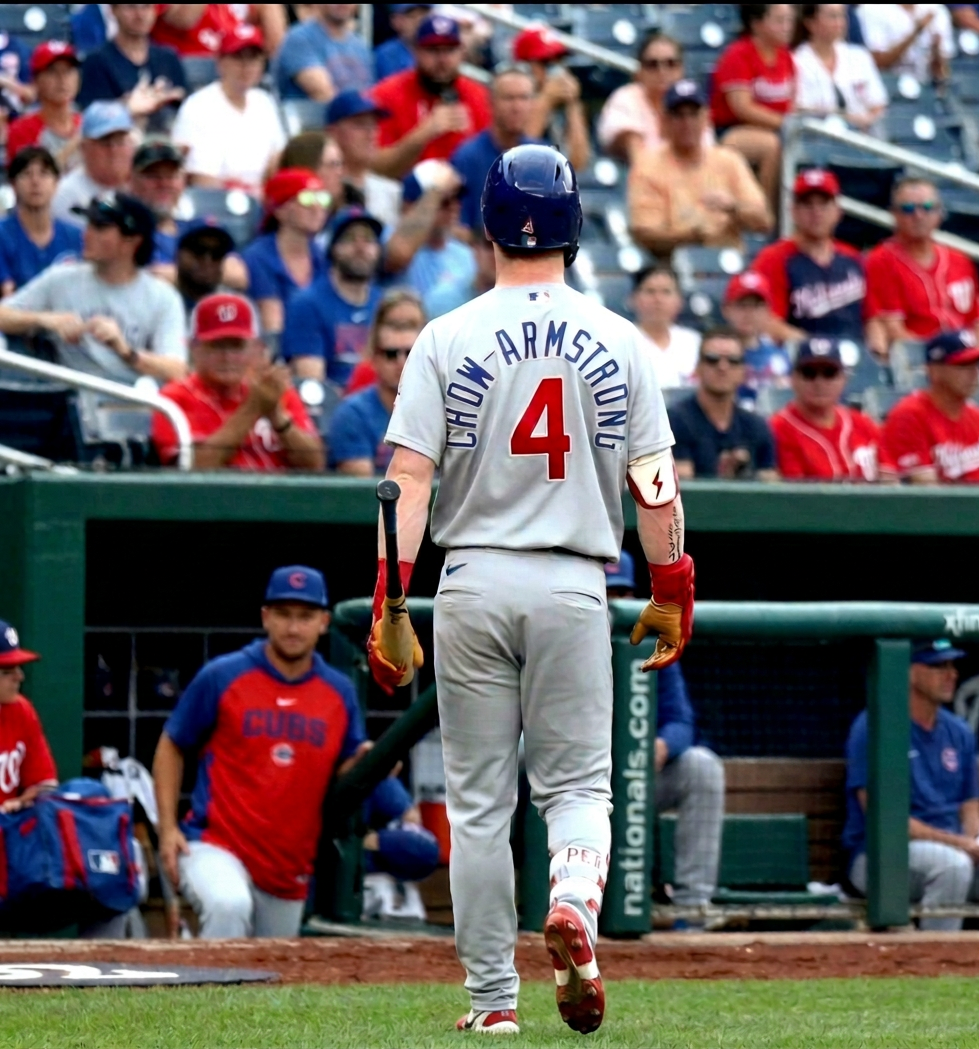
Scott’s short time with the Mets might be defined by a trade of “Frank Robinson-esque” proportions because like Robinson, Pete Crow-Armstrong is about to be named the NL MVP for this year.
The Californian’s nickname took on a PCH type of acronym and has been known as “PCA” and was once a 1st round draft pick of the New York Mets. PCA was traded from the Mets, by Scott, at the trade deadline of 2021 in the deal that sent Javier Báez and Trevor Williams to the Mets.
Big credit to Scott for embracing what happened and being transparent with full accountability. He has done this to a point that this has become a teaching lesson.
Scott has turned his error into a business called Four Ring Consulting so other executives don’t make the same mistake as he made on PCA. Yes, Scott has four rings from his time with the Boston Red Sox as he started as an intern in 2004 when the Red Sox won their first World Series and broke the curse of Babe Ruth and Buckner. In fact, Theo Epstein, former general manager of the Boston Red Sox, credited Zack Scott for identifying Dave Roberts as a trade target. Roberts was a key to beating the Yankees in the NLCS after being down 3-game-to-none.
Scott’s company, Four Ring Consulting, wants to teach you to learn from his mistakes:
“The industry got very good at the information. Most of the bad decisions weren’t data problems. They were human problems: pressure, momentum, and a room that had already made up its mind. It’s the work I do now. I call it Decision Integrity: making the call on what’s true, even when the dynamics in the room are pushing you off it.”
On the podcast, Break It Down Show, Scott candidly discussed the details of the trade that sent Crow-Armstrong to Chicago. If you hire Scott as a consultant, he will go into greater depth on the PCA mistake we’ve been told. The shocker was Scott revealed who the Cubs originally coveted as the headliner in that July 2021 deadline trade.
Now for the grand revelation: The Cubs requested right-handed pitcher Matt Allan, a 2019 3rd round pick, who was MLB Pipeline’s No. 3 Mets prospect in 2021. The same Allan who is already out of affiliated baseball. The two teams then agreed on PCA as the headliner.
Scott said part of the reasoning for trading Crow-Armstrong was his previous bias of the Red Sox negative valuation in that 2020 draft, and added that the Red Sox front office didn’t like Crow-Armstrong in that draft class — when the outfielder went 19th overall in that first round. Is that an indictment on Toboni who was the Director of Amateur Scouting for the Red Sox when Crow-Armstrong was drafted?
“Now that said, when you look at it at the time, you know, when I dissect it and look back and see where did things go wrong, like part of that was my bias coming from Boston, we did not like PCA in the draft.” — Scott said on the Break It Down Show
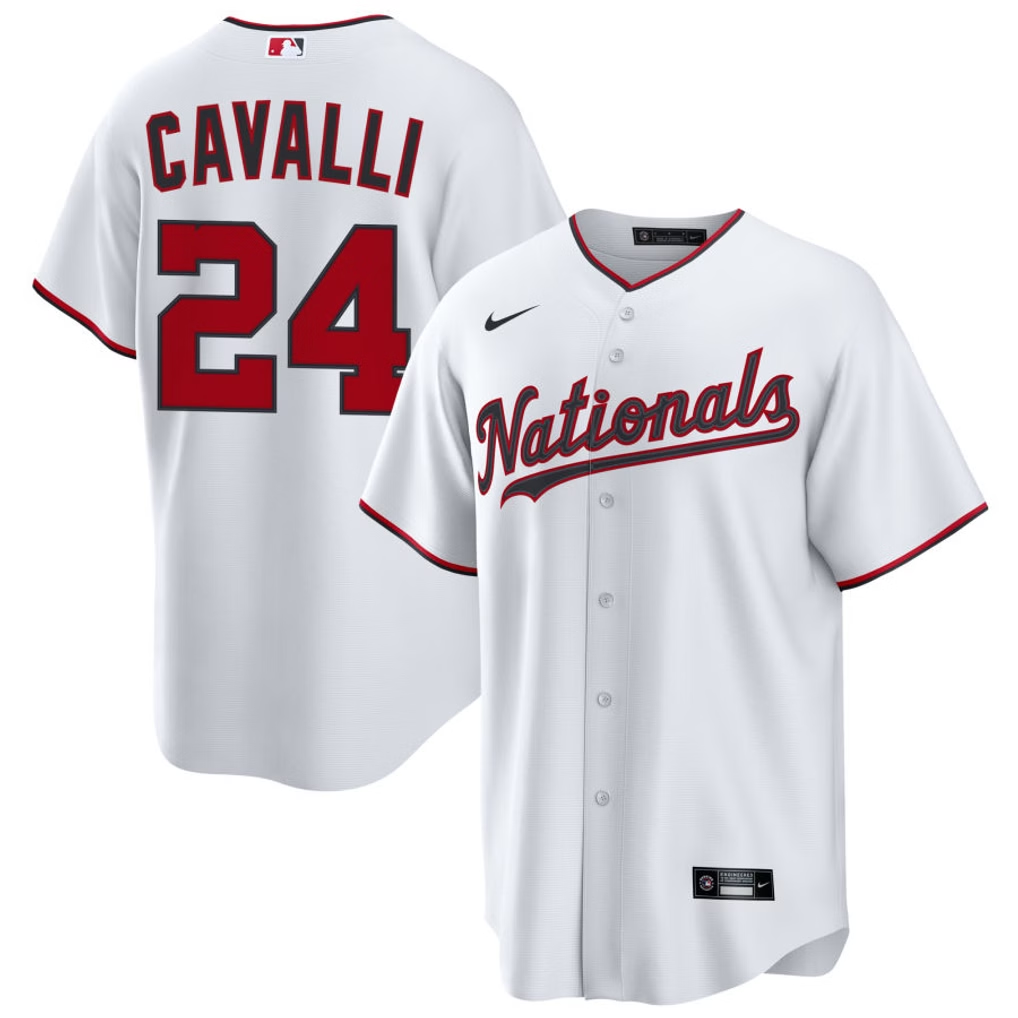
Toboni’s pick in the 1ˢᵗ round of 2020 was Nick Yorke. Whoops. He picked Yorke, two spots ahead of PCA. Remember, there were 18 teams that passed on Crow-Armstrong. Don’t worry, the Nationals were not one of those 18 teams. After the Cubs drafted PCA, three picks later, the Nats drafted Cade Cavalli. That might prove to be the best pick after Crow-Armstrong. Time will tell in hindsight.
In 2021, prospect sites had Crow-Armstrong ranked as the 5ᵗʰ best prospect in the Mets’ system, behind Francisco Alvarez, Ronny Mauricio, Allan and Brett Baty. Credit to Van Wagenen for some good pickups in the 2019 and 2020 drafts.
“And I can tell you, from talking to people in the industry, [Crow-Armstrong] wasn’t someone that teams really asked about, and even the Cubs were asking reluctantly. … He’d been drafted 19th, which isn’t usually where the top talent is. It’s usually in the top 15 picks. So, it doesn’t surprise me that the industry didn’t value him that early in his pro career.” — Scott continued
Do you find Scott’s comment on draft pedigree as a debatable point? Top-15 draft picks versus later in the first round isn’t where the top talent is? Sure, maybe not on draft boards, but we’ve seen great talent picked over various rounds.
Let’s go back to the revelation by Scott that could point a finger at Toboni who oversaw the draft in that year with Brian O’Halloran as the general manager of the Red Sox. Now I want to know what happened in that draft room as pick 17 was the Red Sox pick. To be fair, it was in the middle of COVID and evaluations were complicated.
Lots of great talent was missed by many teams as the second round had multiple top prospects emerge. My pick that year for the Nats in the first round was Tyler Soderstrom. Obviously Cavalli is looking better than Soderstrom. But if I picked 17ᵗʰ, Crow-Armstrong for sure would have been my guy as he was my outfield comp to Trea Turner. Also, PCA came from the same prep school as Lucas Giolito at Harvard-Westlake in Los Angeles, and was a standout on Team USA.
If Nats fans are upset that Toboni traded Jake Bennett for Luis Perales where there is not enough hindsight to fully evaluate that trade a bad one, Toboni could pay Scott to help him fully vet that trade to see if mistakes were made in that internal decision. If Scott really has figured out the meta to the process, why not do that?
“The information you have is rarely the problem. What degrades the call is the pressure inside the room when you commit, the momentum, the consensus that formed before anyone stress-tested it, the voices that didn’t push back hard enough.”
“This is a free thirty-minute Decision Conversation. We figure out what you’re up against and which kind of help fits: the Decision Integrity System you’d own and run yourself, an Advisory relationship with a thinking partner, both together, or neither.” — Scott wrote for his website
True confessions are that I sometimes think I’m smarter than GMs and managers with my decisions — but I’m honest about my mistakes just like Soderstrom over Cavalli. And Scott’s words ring true that what matters is the “[degradation] of the call [from] the pressure inside the room when you commit.”
Would you make the same decision in a group-think process versus as an individual with no other opinions? Or would you even make the same decision when the pressure is up inside that room? I often ponder just that in my own honesty and accountability. Sometimes you second guess yourself. My draft decisions have been excellent as you’ve read them for years, and we don’t have a scouting department. Soderstrom over Cavalli is one that I hoped would be proven wrong. But what was Toboni thinking of Yorke over Crow-Armstong?
Last night, it was easy for me to comment and write in the previous article that not a chance I would pitch Ian Seymour in that spot in the 6ᵗʰ inning of the World Series. Sure enough, a blown save to the first batter he faced. Heck, Seymour would not pitch in any hi lev inning for me based on what I saw in the ALCS. Coincidence, Seymour was drafted in that 2nd round of the 2020 draft.
Can we say again: shoulda, woulda, coulda.










Leave a Reply