
In the hyper-competitive landscape of Major League Baseball, front-office executives usually treat their exact budget and financial strategies like state secrets. General Managers and Presidents of Baseball Operations routinely deploy masterclasses in obfuscation, using phrases like “flexibility” and “sustainability” to avoid making concrete financial promises to a demanding fan base. You never want to look like a liar. But, when you know your plan is to increase spending — you want to say that as a positive without giving too many specifics.
When a franchise hits an undeniable window of organizational growth, the playbook changes. When a General Manager or President of Baseball Operations steps up to a microphone and explicitly states that payroll will be increasing, it is not a slip of the tongue or an anomaly. It is a calculated, entirely normal strategic move that serves multiple organizational purposes, and many teams do it. The Orioles have done this for years. Like the Dallas Cowboys in football, the Orioles always want to win the offseason.
While baseball purists might view public financial declarations with skepticism, a team executive projecting an increase in spending during a period of growth is normally standard operating procedure when the team knows they will be moving in that direction — except in Washington, D.C. A positive message of increased spending energizes a team’s fan base. They say that season ticket holders are the life blood of a team.
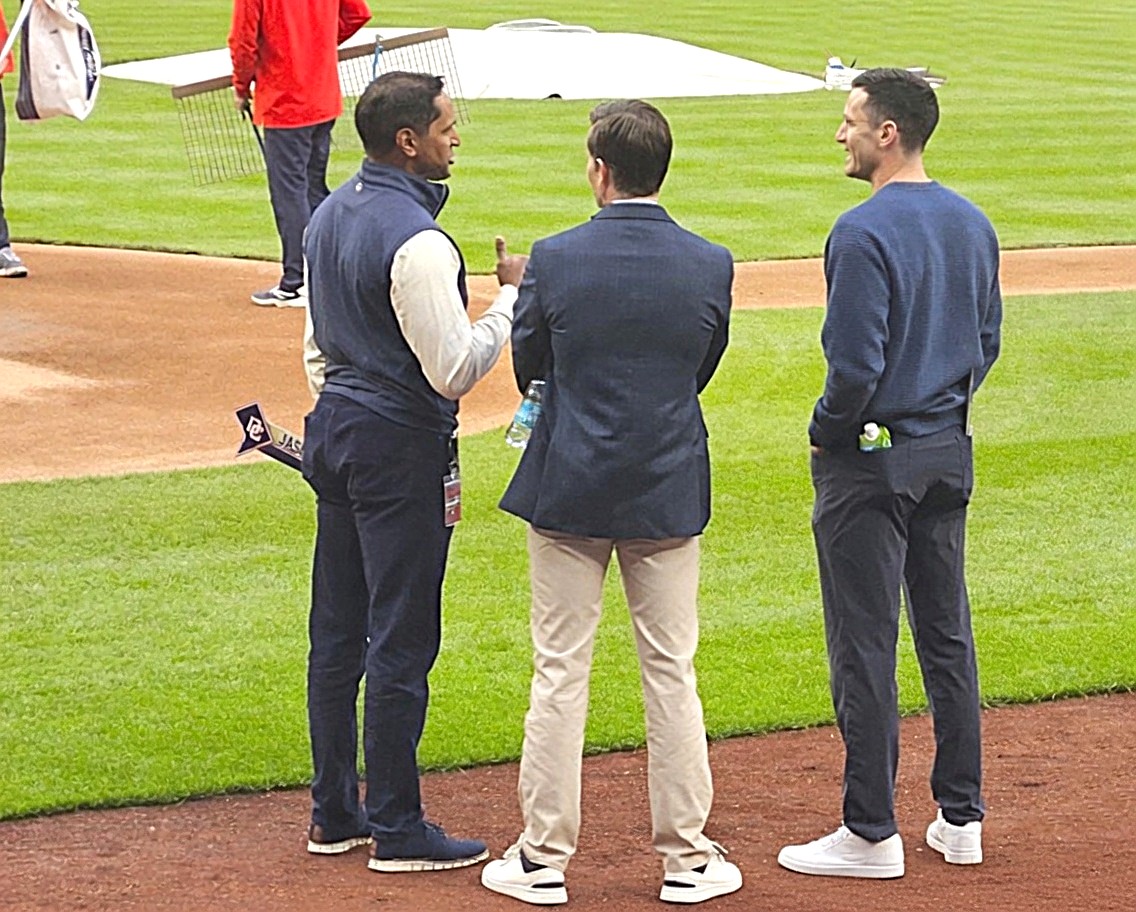
Spotlight on the Washington Nationals. When President of Baseball Operations Paul Toboni posted his 1,566 worded letter to the fans. Later that day, Toboni appeared in interviews because his letter to the fans was unique. Harold Reynolds on MLB Network called it the Gettysburg Address. “I wanted to be real with the fans about where we’re doing well, and what we need to improve so they don’t feel like we’re misleading them … put us in a position to have success in 2027,” Toboni said on MLB Network. Well, he never mentioned in his 1,566 worded letter that his 2026 bullpen set the MLB record at 42 blown saves. And no mention of spending.
Toboni was asked about spending, and per usual treated the question like he is Superman avoiding kryptonite. Why?
“… The more money you spend in free agency, the better off you’re going to be. But I also don’t want to fall victim to that’s the only way you’re going to be good.”
— Toboni said on 106.7 The Fan
These are the types of generic answers that Toboni gives to questions on increasing spending. Hours later, we broke the news that Young was extended. Has Toboni grasped the concept of carpe diem?
Alignment and Accountability with Ownership
In the corporate structure of a modern MLB team, the top baseball executives rarely act as independent figures. They operate under budgets strictly dictated by ownership groups. Therefore, an executive publicly announcing a payroll hike is almost always a coordinated effort reflecting a directive from above — and this is a failure on the Lerner ownership group to not grasp what the fans are looking for. The Lerners have never done this. But they have been known to do the opposite.
“We really can only afford to have one of those two guys,” Lerner told NBC Sports Washington at the time in Dec. 2019 referring to signing both Stephen Strasburg and Anthony Rendon. “They’re huge numbers. We already have a really large payroll to begin with.”
The Nationals ended the 2019 season with a total payroll of nearly $201 million, according to Spotrac, the 6th largest payroll to end the season. Still, Lerner should not have publicly said what he was quoted as saying at the time. A complete debacle. In hindsight, both contracts at $35 million a year turned out to be two of the worst contracts in sports’ history totaling $490 million combined, and Strasburg was the Nats problem; Rendon the Angels.
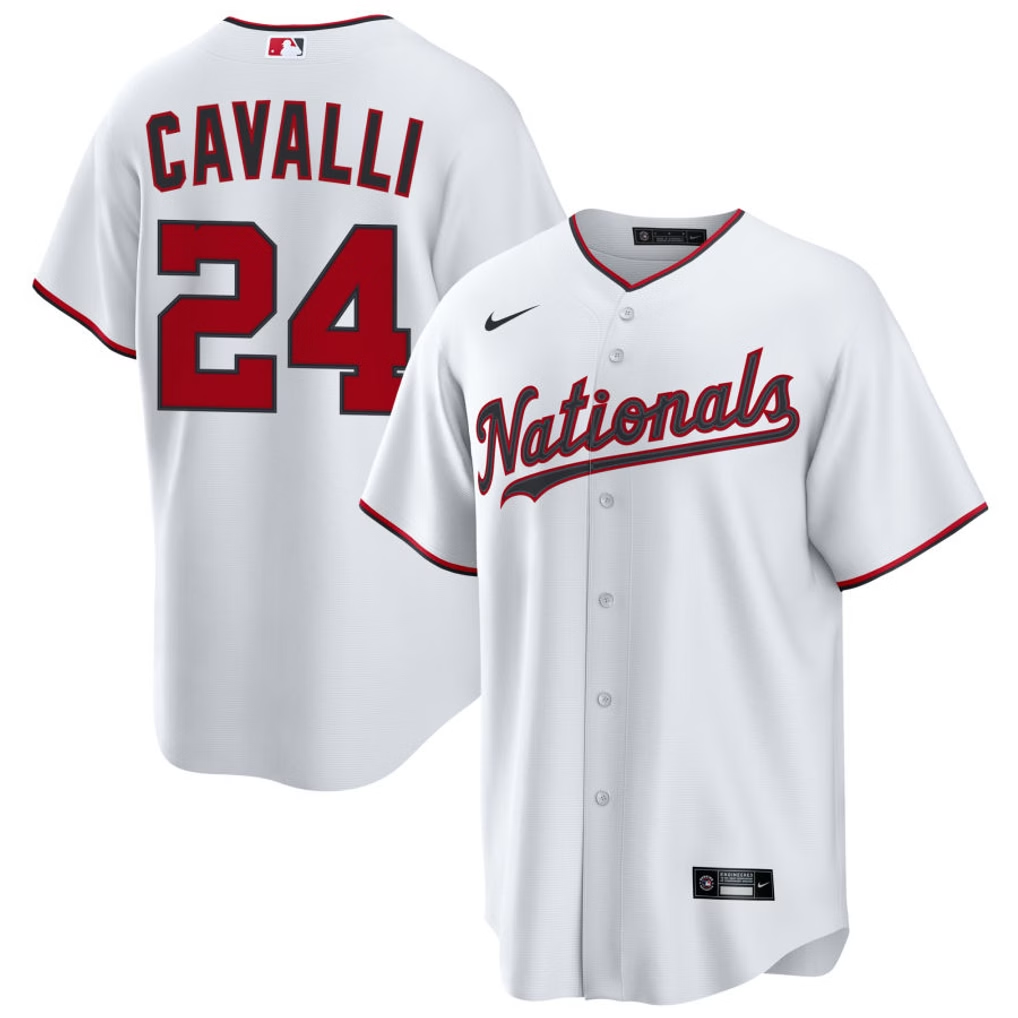
These days, Lerner is seen but not heard. That is probably a good strategy. But why won’t Toboni speak of payroll growth? We have already seen multi-year guaranteed extensions for both Cade Cavalli and Jacob Young. And Jim Bowden of The Athletic wrote the Nats will approach both James Wood and CJ Abrams with extensions.
If there was some semblance of a strategy to excite the fan base, you wouldn’t know it. Season ticket renewals were due on August 31. Shortly afterwards, Cavalli’s contract was extended. Why wouldn’t you start that conversation before August 31 to ignite and excite a fan base starved for this kind of news? Opportunity lost. While the contract was great news, you have to break that news before Aug. 31. That is commonsense 101.
When a team is growing on the field (surpassing win projections, developing a young core), ownership groups often feel the pressure to strike while the irons are hot. By allowing an executive to state that payroll will increase, ownership receives the public credit for “wanting to win,” while simultaneously holding the front office accountable for translating those new financial resources into actual wins.
Even after the 2024 season, former ex-GM Mike Rizzo spent $50 million of new money and traded for Nathaniel Lowe for over $10 million, signed Michael Soroka for just under $10 million, Trevor Williams to a $14 million 2-year deal, and several other signings that went over $50 million. But the team never talked about increasing payrolls for the 2025 season. Why not? Is it any wonder why the Nationals struggle with their public perception and declining attendance?
What the Nationals do seems to be akin to person on a first date who doesn’t say anything positive about themselves and avoids questions of their future. And you wonder why there is no second date?
This team has alienated thousands of fans over the years. Instead of growing the fan base after the World Series win, Lerner stumbled awkwardly over publicly discussing Strasburg and Rendon. That is Public Relations 101 of what you DO NOT say.
The Financial Backdrop: A New Era of Certainty?
This intersection of growth and spending is particularly relevant given the broader economic discussions happening across the league. Major League Baseball has actively pushed for major structural adjustments, including proposals for a salary cap and floor system designed to link player pay directly to revenue splits.
Owners inherently desire financial predictability to protect and leverage franchise values. Projecting a payroll increase shouldn’t be a financial gamble — it should be a calculated gamble or no gamble at all if you are increasing revenues to cover it. The Lerners have owned the Nationals in their home at Nationals Park for 19 seasons without EVER selling the stadium naming rights. Imagine if that number was just $10 million a year. That is $190 million never realized. Another fail.
The Blueprint of a Rebuild: Why Paul Toboni’s Payroll Flexibility is the Right Signal at the Right Time
The Washington Nationals have deployed a tight-lipped caution after dismantling their 2019 World Series roster over the years. However, when an organization hits an undeniable window of organic growth, the playbook must shift.
Enter Toboni, the Nationals’ young President of Baseball Operations who was hired a year ago. After taking the helm, Toboni oversaw a massive foundational shift: a consensus-defying 77-win campaign that shattered projection models and a complete overhaul of the club’s player-development infrastructure. With the team clearly ascending, Toboni’s public declarations regarding “future payroll flexibility” and leveraging creative spending avenue missed the mark.
For a rebuilding franchise on the rise, an executive publicly hinting at a spending spike should be made clear and be standard operating procedure for three core reasons.
+-----------------------------------------------------------------------------------+| THE TOBONI BLUEPRINT: REBUILD TO REGIME |+---------------------------------+-------------------------------------------------+| STRATEGIC LEVER | FRANCHISE IMPACT |+---------------------------------+-------------------------------------------------+| Foundational Infrastructure | Overhauled technology, paid up for new tech and || | machinesand expanded development staff. |+---------------------------------+-------------------------------------------------+| Proof-of-Concept Performance | Jumped from 66 wins to a 77-win season, || | outperforming 65-win projection models. |+---------------------------------+-------------------------------------------------+| Public Payroll Messaging | No public message to the fans. Why not? || | +---------------------------------+-------------------------------------------------+
1. Capitalizing on “Proof of Concept” Growth
In professional baseball, you cannot ask a fan base to buy tickets on abstract promises. But if you make positive promises and then over-deliver, that is how you excite and ignite your fan base. You have to grow that attendance base. On Aug. 31, the Nats had a paid attendance of only 10,746. We’ve seen modest protest rallies in DC draw more fans.
That should be an embarrassment to the Lerner ownership group to take action and bring change. The team hired a brilliant President of Business Operations, Jason Sinnarajah, and they are adding, per a source, a Chief Marketing Officer. They know what needs to be done, but Lerner needs to back them up and get Toboni on board. Even with the team in contention deep into July, the team’s attendance fell from 2025 to 2026. That isn’t on Sinnarajah — that is on Lerner.
Structural expansion demands consumer buy-in. When Toboni took over a youth-heavy roster featuring rising stars like Wood, Abrams, Cavalli and the hype on Dylan Crews, the goal was to build a sustainable, modern foundation. With that should have been renewed optimism in the team and more fans created.

Attendance should not have declined. Per ChatGPT, the Nationals have the best valued ticket of all four major sports in D.C. including the Capitals, Wizards, and Commanders (NHL, NBA, NFL).
By pushing the Major League team to a highly competitive season, the front office established its “proof of concept“. When an executive speaks publicly about payroll capacity at this exact juncture, it should act as the ultimate marketing catalyst. It tells a starved fan base that their patience is being rewarded, justifying future ticket demands and driving immediate corporate sponsorship engagement while the momentum is hot. This would be perfect at a time that the team has held ticket prices firm for several years.
2. Posturing for the Free Agent and Extension Market
A baseball executive does not just speak to the local media; they broadcast to the entire industry. Publicly acknowledging that you have the green light to spend sends a loud signal to players and agents also: The District is open for business.
The Nationals enter this year’s winter transition with an incredibly lean base payroll allocation and per our projections in the mid-$80 million range on CBT payroll, that is near the lowest alongside the Cleveland Guardians.
Elite free agents do not want to sign with franchises stuck in a perpetual, static rebuild. Toboni’s open discussions regarding “creative ways to use that payroll” — whether targeting marquee external talent or cementing long-term internal extensions — instantly alters how the franchise is perceived on the market. It positions Washington as an aggressive, desirable destination rather than a passive onlooker.
3. Creating Strategic Accountability with Ownership
In MLB’s modern corporate structure, a chief baseball executive rarely operates as an independent financial agent. They run on budgets strictly dictated by ownership groups—in this case, managing principal owner Mark Lerner.
When a team is growing rapidly on the backfields and matching that progress with wins at the big-league level, ownership groups feel the natural pressure to strike. Toboni’s calculated transparency serves to keep both sides of the warehouse aligned. It should have signaled to the public that ownership is dedicated to winning, while establishing a clear mandate for the front office to translate those fresh financial resources into championship equity. Unfortunately there is a trust issue, and fans want to hear Toboni say the words about spending increases.
The Bottom Line
Say it.












Leave a Reply