
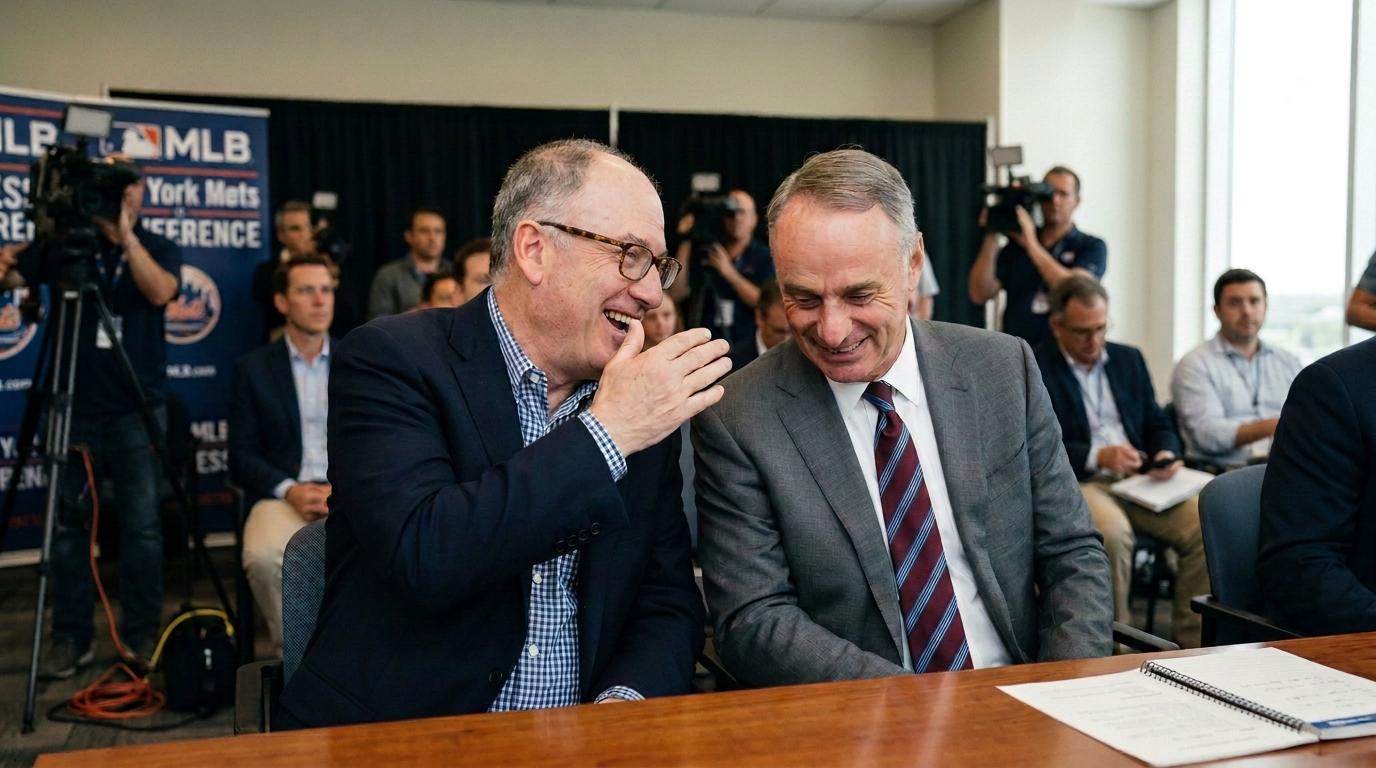
When former Boston Red Sox president Larry Lucchino famously dubbed the New York Yankees the “Evil Empire” in December 2002 after losing a bidding war for José Contreras, he was lamenting a financial reality where one big-market behemoth could simply outmuscle the rest of baseball. Nearly a quarter-century later, the empire hasn’t fallen—it has just relocated from the Bronx to Queens.
Still, some would argue that the Los Angeles Dodgers have the ability to spend just as much as the Mets. The difference is the Dodgers have much higher revenues than the Mets making this a question of whether the Mets spend beyond their corporate means? Per both Forbes and CNBC, the Mets lose money as a business entity in figures above $100 million annually. The Dodgers try to maintain a breakeven and spend as a function of their revenues.
By signing two-time Cy Young winner Tarik Skubal to a record-shattering nine-year, $450 million contract on Sunday night, New York Mets owner Steve Cohen didn’t just secure the best pitcher on the planet — he deliberately poked the bear. All of this comes just eight days before Major League Baseball’s Collective Bargaining Agreement expires at 11:59 p.m. ET on December 1—a deadline widely expected to trigger a brutal owner-imposed lockout centered entirely on implementing a hard salary cap.
Skubal is a Boras Corporation client, “The Skub-ino has fallen,” Scott Boras told Bob Nightengale of USA Today. “A lot of doors are opening now. No doubt about it.”
With Skubal as the top ranked free agent this offseason coming off the board, will that open the floodgates as the first domino falling? Boras believes that is the case.
To add to this, news broke this morning that the Mets are signing Paul Goldschmidt to a one-year contract. He will turn 40 years old in September. The former Yankee will move across town to the rival Mets. Another shot at the Yankees?
Two Players Outspending Entire Franchises
With Skubal’s ink barely dry, the Mets now hold the two most expensive contracts in Major League Baseball history for a pure pitcher and a position player:
Tarik Skubal (Pitcher): Nine years, $450 million ($50 million average annual value)
Juan Soto (Position Player): 15 years, $765 million ($51 million average annual value)
Combined, the Mets have committed an eye-watering $1.215 billion to just two players—and their combined $101 million average annual salary dwarfs what multiple MLB franchises spent on their entire 26-man rosters in 2026.
| Mets Duo vs. MLB Full Rosters | 2026 Opening Day Payroll / AAV | Difference vs. Soto + Skubal ($101.0M) |
|---|---|---|
| Juan Soto & Tarik Skubal (Combined AAV) | $101.0M | — |
| $70.0M | +$31.0M | |
| $79.4M | +$21.6M | |
| $83.9M | +$17.1M | |
| $88.0M | +$13.0M | |
| $89.6M | +$11.4M | |
| $91.8M | +$9.2M | |
| $96.7M | +$4.3M | |
| $98.1M | +$2.9M |
Expand the lens slightly more to include Francisco Lindor and Bo Bichette, and New York’s top four earners alone combine for over $182 million in 2027 salary — more than 20 MLB clubs currently have allocated to their entire 2027 payrolls.
Abandoning the Playbook: Stearns’ Philosophical Shift
Beyond the shockwaves sent through MLB’s labor negotiations, the Skubal megadeal represents a dramatic departure from the long-standing roster-building philosophy of Mets president of baseball operations David Stearns.
Throughout his tenure in Milwaukee and his first three offseasons in Queens, Stearns operated by a strict cardinal rule: never give massive, long-term free-agent contracts to starting pitchers—especially those entering their 30s. Until Sunday, the longest contract Stearns had ever handed a free-agent starter in New York was a three-year, $75 million deal for Sean Manaea, preferring instead to build rotations through short-term bounce-back candidates and homegrown arms. (His lone exception—an unsuccessful 12-year, $325 million pursuit of Yoshinobu Yamamoto—was for a 25-year-old pitcher with no MLB wear and tear).
Handing nine years and $450 million to Skubal—who just turned 30 and carries a history of elbow procedures—shatters that blueprint. After watching a rotation collapse that sunk the Mets to a 74–88 last place finish in the NL East in 2026, Stearns and Cohen abandoned risk aversion entirely. With Cohen’s $26+ billion fortune acting as an unlimited safety net, the Mets decided that securing a generational, two-time Cy Young ace outweighed every organizational rule about pitching volatility.
Beating the Buzzer on Baseball’s Economic Overhaul
The timing and structure of Skubal’s deal—which includes an immediate, $45 million lockout-proof signing bonus—read like a direct provocation to MLB’s ownership ranks.
Under the league’s latest CBA proposal, which calls for a $258.2 million salary cap by 2028, every single facet of Skubal’s contract would be strictly outlawed. Management’s proposed rules would cap free-agent contracts for players switching teams at five years and roughly $212 million to $213 million, with maximum annual salaries barred from exceeding 15% of the overall cap.
In signing Skubal, Cohen effectively beat the buzzer on baseball’s free-spending era. Soto and Skubal alone account for nearly 40% of the league’s proposed 2028 payroll ceiling.
The Ultimate Labor Paradox
What makes Cohen’s latest spending spree so fascinating—and infuriating to small-market owners—is the glaring contradiction at the heart of it:
- The “League-First” Spender: Cohen sits on MLB’s executive council and has publicly declared himself a “league-first guy” who is open to systemic economic reform. As The Athletic’s Ken Rosenthal noted, Cohen is an owner who “effectively wants to be saved from himself.” Yet, until the rules officially change, he refuses to disarm unilaterally—especially after back-to-back postseason misses.
- Fuel for Both Sides: For small-market owners, watching Skubal leave the Dodgers for a $450 million payday in Queens—while low-budget clubs like the $70 million Guardians punch above their weight — is Exhibit A for why a cap-and-floor system is needed to rein in billionaire spending. Conversely, for the MLB Players Association (where Skubal serves on the executive subcommittee), the deal proves the true market value of superstar labor—and highlights why they will never willingly accept an artificial ceiling.
A Change At The Top
Stan Kroenke will become MLB’s richest owner with an estimated net worth of $27.6 billion once his record $4 billion purchase of the Los Angeles Angels closes in January 2027, edging out New York Mets owner Steve Cohen ($26.7 billion).
Here are the top 5 richest MLB owners (including corporate ownership groups) based on late-2026 Forbes and industry estimates:
| Rank | Owner / Group | Team | Estimated Net Worth | Primary Source of Wealth |
|---|---|---|---|---|
| 1 | Stan Kroenke (pending close) | $27.6 billion | Real estate, sports franchises (Kroenke Sports & Entertainment) | |
| 2 | Steve Cohen | $26.7 billion | Hedge funds (Point72 Asset Management) | |
| 3 | Rogers Communications | $18.7 billion | Telecommunications and media (corporate valuation) | |
| 4 | Mark Walter | $16.0 billion | Financial services (Guggenheim Partners) | |
| 5 | Ilitch Family | $7.6 billion | Food/pizza (Little Caesars), sports, entertainment |
Stan Kroenke owns eight major professional sports teams through Kroenke Sports & Entertainment (KSE)—including his pending purchase of the Los Angeles Angels—with a combined annual player payroll exceeding $1 billion across North America and Europe. Kroenke’s largest payroll is with the Los Angeles Rams, a league with a hard cap. Will Kroenke try to outspend Cohen in MLB?
Once the Angels acquisition closes in January 2027, Kroenke will become the first owner in history to hold controlling stakes across all five major North American men’s professional leagues (NFL, NBA, MLB, NHL, and MLS), alongside Premier League giant Arsenal FC.
Stan Kroenke’s Sports Teams & 2026–27 Payrolls:
| Team | League | 2026 / 2026–27 Payroll (Cap/Wage Bill) | Highest-Paid Player |
|---|---|---|---|
| NFL | $310.9 million (total cap allocations) | Matthew Stafford ($48.3M cap hit) | |
| Premier League (England) | ~£199.1 million (~$253M fixed; £258.8M w/ bonuses) | Bukayo Saka (£15.6M / ~$19.8M) | |
| NBA | ~$200+ million (over luxury tax threshold) | Nikola Jokić ($59.0M) | |
| MLB | $144.6 million (projected 2027 total) | Mike Trout ($37.1M) | |
| NHL | $103.0 million (total cap allocations) | Nathan MacKinnon ($12.6M) | |
| MLS | $12.1 million (guaranteed compensation) | Paxten Aaronson / Rafael Navarro | |
| Women’s Super League | ~£5–6 million (estimated wage bill) | Alessia Russo / Mariona Caldentey | |
| NLL (Lacrosse) | $815,970 (projected 2026–27 cap) | Eli McLaughlin / Connor Robinson |
Key Takeaways on Kroenke’s Spending Philosophy:
- Cap-Maximizing in Capped Leagues: In hard-cap leagues like the NFL (Rams), NHL (Avalanche), and NLL (Mammoth), KSE consistently spends right up to the league ceiling. In the NBA, Kroenke has pushed the Nuggets into the luxury tax to keep a championship core around Nikola Jokić and Jamal Murray.
- Strategic Investment in Uncapped Leagues: In the Premier League, Kroenke has steadily raised Arsenal FC‘s fixed wage bill to a club-record £199.1 million for 2026–27 to compete for titles, while keeping Colorado Rapids toward the bottom of MLS spending (28th of 30 teams).
- What It Means for the Angels: The Angels currently sit 23rd in MLB payroll at $107.0 million in committed 2027 money ($144.6 million projected after arbitration and pre-arbitration signings). Historically, Kroenke invests heavily in roster payroll once a franchise’s stadium and local revenue infrastructure are modernized—just as he did after building SoFi Stadium for the Rams.
A Looming Showdown
In 2002, Lucchino complained that the Yankees’ “evil empire” was extending its tentacles across the globe to corner the market on talent. In November 2026, Steve Cohen is stretching the boundaries of baseball’s payroll system to its absolute breaking point and heading towards $400 million in CBT payroll.
Whether Skubal’s contract ends up being grandfathered into a new capped era or stands as the final monument to baseball’s unconstrained free market, one thing is clear: as MLB marches toward a winter work stoppage, Cohen isn’t worried about the fallout. He is daring the rest of baseball to stop him.
Cover photo is AI generated for this article












Leave a Reply