
And we’re back with the second part of our report card series on the 2026 Washington Nationals!
The same caveats listed in part 1 apply here, too: This is just for fun, players are in fact being graded on a curve, and we’re using the same grading system you would see in an American high school.
Here we go, leading off with one of the Nats’ best players of the year…
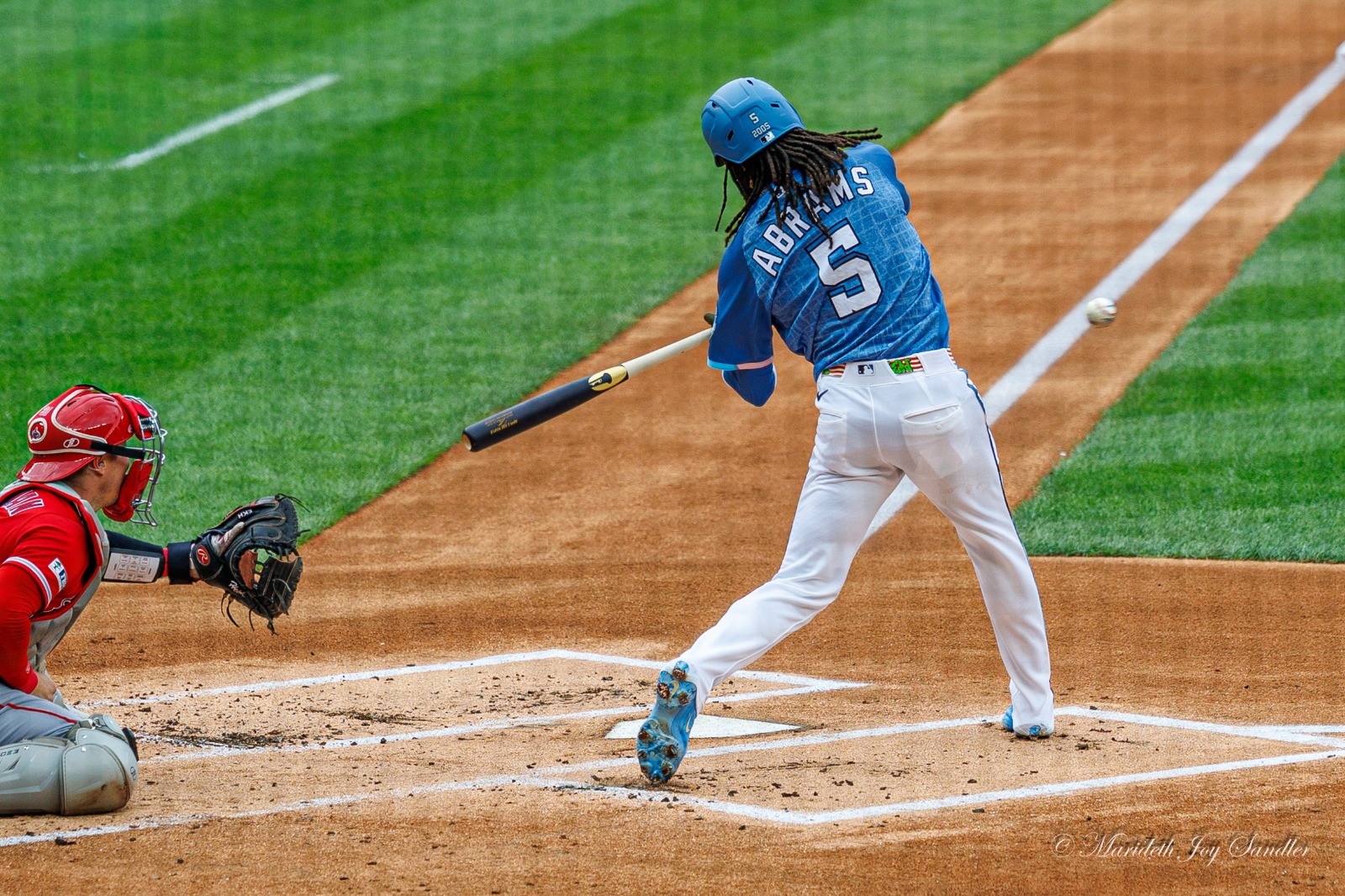
CJ Abrams: A-
By just about any measure, Abrams had a phenomenal season. He handily led the Nats in rWAR; was one of just two players in baseball with at least 30 doubles, 30 homers, 30 stolen bases, and 100 RBI; and just might pocket some downballot MVP votes this fall. He led a surprising offensive resurgence for a team that had ranked near the bottom of most offensive categories in recent seasons. There ought to be, and likely will be, serious chatter around a long-term extension for Abrams this winter. The biggest reason this isn’t a straight A grade, or even an A+, is Abrams’ defense, and the consequences thereof. Abrams was the worst regular shortstop in MLB this year, and the Nats announced in mid-August that he would in fact transition to second base moving forward. While the team initially said Abrams was on board, it soon became clear Abrams was not really on board with this, and he proceeded to take almost a week off with what the Nats apparently thought was a minor injury and put up his worst batting numbers of the year over the following few weeks. Thankfully, Abrams got back in the groove in time to finish the season strong, powering the team to multiple series wins down the stretch and writing his name into the record books.
Andrés Chaparro: B+
Considering he entered the season with a career .627 OPS, it seemed fair to wonder just how long the Nats would give Chaparro before cutting the cord. As he slouched into July with a .156/.544 slash line, despite mostly getting favorable matchups against left-handed pitchers, the answer to that question certainly seemed to be “too long”. Then Chaparro homered July 1 — his first longball of the season — and never looked back. In the second half of the season, Chaparro was one of the Nats’ best hitters, completely turning his year around and making a case for a significant role on the 2027 team. While Chaparro well exceeded expectations on balance, his deeply dismal first half, not to mention his poor defensive ratings, do keep him out of rarified air on this report card.
Dylan Crews: D+
Crews didn’t have a bad season, exactly, but he also didn’t have the kind of season most fans were hoping to see from a former #2 overall draft pick in his third taste of the big leagues. Crews was among the fastest players in baseball this year, played a generally excellent defensive outfield across all three spots, and hit enough to stay in the lineup after spending the first part of the season at Triple-A Rochester. He also hit into a lot of hard-luck outs, especially in the second half. But his overall batting stats were decidedly below-average, and while that’s fine if you’re a glove-first outfielder without much of an offensive skillset, it’s pretty disappointing from a guy who was one of the most polished college hitters of the 21st century and describes himself as a five-tool player. Crews has a lot to work on for 2027, and at 24, it’s way too early to give up on him. But it might be time for us to lower our expectations, too.
Harry Ford: D+
The Nats probably hoped for a lot more out of Ford this year. A consensus top-100 prospect when the Nats acquired him from the Mariners last winter, Ford saw limited action in spring training due to his participation in the World Baseball Classic, then found himself optioned to Triple-A for an extended tuneup at the start of the year. It took months for Ford to find his feet in his new organization, finally earning a callup in mid-July and homering in his Nats debut. Ford was more or less fine, for a rookie catcher, after joining the major league team. He didn’t get enough hits, nor did he hit the ball particularly hard, but he showed himself to be a pretty good judge of the strikezone and took his walks. He was decent at handling the pitching staff and controlling the running game, although his arm accuracy left something to be desired. But given that Ford looked like a potential franchise catcher coming into the organization, and he ended up being a second-half second-stringer only, he misses out on a passing grade for his inaugural Nats campaign.
Luis García Jr.: A
García was a coinflip decision last winter on whether to tender him a new contract. He rewarded the Nats’ faith in him, doing just about everything they asked this season: changing his position in spring training from second base to first base, drastically improving his bat speed and power numbers, and generally being one of the best players on the team through the beginning of August, when the Nats traded him to the Yankees for a package of pitchers. García still didn’t walk much, but that was never really his game. Where he excelled was in shoring up first base, a weak position for the Nats for several seasons running, and providing a surprising amount of pop, topping his career high in home runs before the season’s midway point. He’s been more good than great since going to the Bronx, but he was a model National this year and a player whose absence was keenly felt in the last two months of the season.
Brady House: C
The Nats faced a conundrum midway through the first half. By late May, House was running an error rate of just under 10% on chances at third base. While his hitting wasn’t disastrous, it also wasn’t making up for the liability he posed on the infield. In a surprise move, the Nats optioned House to Triple-A Rochester for two months. During that minor league assignment, House overhauled his approach at the hot corner and settled into a groove as a hitter, even hitting for the cycle. House’s results in the second half, while not phenomenal, were considerably better both in the field and at the plate. The plus power the Nats expected when they drafted House in the first round back in 2021 still hasn’t shown up on a consistent basis, and House’s impatience at the plate kept his on-base percentage this year lower than the Nats would like to see, but he probably did enough in the second half to enter 2027 as Washington’s presumptive everyday third baseman.
Daylen Lile: C
Lile had an almost perfectly average season at the plate overall, and he shouldn’t be concerned at all about his status with the Nats this winter. Even so, Lile’s year rates as at least a slight disappointment, given his incredible August and September as a rookie in 2025. For much of the year, Lile seemed to be pressing, searching in vain for his previous form, frequently chasing pitcher’s pitches out of the zone in a way we weren’t used to seeing from him. Even as many of his teammates slumped, he turned his fortunes around somewhat in the second half, even if he didn’t quite reach the lofty highs of last year. Lile’s season deserves a passing grade, but his inconsistency limits it to a solid C.
Curtis Mead: A+
By rights, the Nats shouldn’t have expected to get anything out of Mead when they acquired him from the White Sox for an unranked prospect during Opening Weekend. Mead had competed for a roster spot on the Southside but failed to make the team out of spring training. He had been DFA’d. The Nats traded a late-round senior sign who had yet to make his professional debut and plugged him in as a right-handed bench bat. All Mead did after that was thump opposing pitchers to the tune of an .852 OPS, more than quadruple his career home run total, and provide passable if unspectacular defense at three infield positions, ultimately solidifying himself as the Nats’ everyday third baseman through the first half of the season, not to mention a fan favorite. Mead was one-half of one of the last “spring” trades and one of the first “summer” trades, going to the Red Sox in a shock trade for young starter Connelly Early. Unfortunately, he broke his hand in his Red Sox debut and has been on the shelf since then.
Drew Millas: F+
There’s no way around it: Millas had a terrible year. He put up a paltry .539 OPS in 50 games, getting plenty of opportunities as Blake Butera played his catchers in a 50-50 timeshare for most of the season. Millas gets a plus to his letter grade because he really did give blood for the cause. After trying to play through recurring pain from the finger injury he suffered last year, Millas finally had to call it quits in July, later undergoing surgery to fuse the knuckle in the index finger of his glove hand, which he’ll never be able to bend again.
Yohandy Morales: B
It looks like Morales is always going to be a streaky player. The question is whether he can limit the cold streaks and produce enough during the hot streaks to stick at the MLB level. The early returns this season were positive. Morales was promoted for his major league debut when rosters expanded in September, and he acquitted himself well in part-time action. The swing-and-miss tendencies that held him back in the minor leagues were still quite evident, and Morales struggled in particular against velocity, but he also showed off easy power to all fields and played a decent first base.
Nasim Nuñez: C-
After finishing 2025 on a tear, Nuñez was given the chance to play every day as the starting second baseman for most of the season. In some ways, the now-26-year-old met the moment. In other, important ways — not so much. Nuñez wasn’t just the worst everyday hitter in MLB by OPS this year, he was the worst in decades. He went through bizarre spells in which he seemed to be trying to hit deep flyballs every time he was at bat, instead of playing within himself and flipping balls over the infield. He also committed some bizarre fielding errors on routine plays. On the other hand, Nuñez also led MLB in both stolen bases and range factor, setting a new team record for steals in a season. While both his batting stats and success rate on the basepaths dipped in the second half, he was a surprisingly productive offensive player in the middle part of the season, slashing .345/.825 with fifteen steals in seventeen attempts from the start of June through July’s West Coast roadtrip. The issue with Nuñez is consistency. He’ll make the most amazing, acrobatic play you’ve ever seen by a middle infielder, then the next inning, he’ll airmail a throw that would have beaten the runner by five steps. He’ll work an eight-pitch walk and get himself into scoring position, then he’ll get thrown out by a mile trying to score on a routine comebacker to the mound. He’ll pepper low line drives into shallow center field, then next game, he’ll be back to dropping his shoulder and swinging out of his shoes trying for a home run every at-bat. It’s just barely a passing grade this year for Nuñez, thanks mainly to his record-setting season on the basepaths. He should still have a role on next year’s squad, but it would be surprising if it isn’t significantly reduced.
Abimelec Ortiz: F
Ortiz had to wait until August for his opportunity to come, after battling inconsistency at Triple-A Rochester. He got off to a very impressive start with the Nats, but after looking initially like a ready-made replacement for Luis García Jr., his performance flatlined in the second half of August and through the month of September. While Ortiz wasn’t the highest-rated piece of the package the Nats acquired for MacKenzie Gore last winter, the Nats surely hoped he would be able to contribute more than he did this year at the major league level.
Andrew Pinckney: B
One of the heroes of the International League championship series this year, Pinckney acquitted himself fairly well when given a couple cups of coffee with the Nats. He only collected 29 MLB plate appearances despite being the nominal roster replacement for James Wood, during Wood’s monthlong stint on the injured list, then again rounding out the bench for a series in mid-September. What might have given the Nats pause about giving Pinckney more run is his swing-and-miss tendencies. Pinckney struck out in ten of those plate appearances at the major league level, as well as over 30% of the time during the Triple-A regular season. The power-speed combination that Pinckney brings is enticing, and he’s a tremendous athlete, but his ceiling will be limited unless and until he can rein in those strikeouts.
Keibert Ruiz: A-
Washington’s “primary catcher” mostly by dint of being healthy and available for the major league team all season, Ruiz enjoyed his best season to date. Ruiz made major strides behind the plate under the tutelage of the Nats’ new coaching staff. He also contributed at the plate in a way he hadn’t been able to do in years. While the advanced metrics certainly suggest a fair amount of good fortune was involved, Ruiz put himself in a good position to benefit from batted-ball luck by posting one of the lowest strikeout rates in MLB. Ruiz still has things to work on; his pop time remains one of the longest in MLB, and his power was sporadic at best. But it was a pleasant season to see from a player under long-term team control who had underachieved in recent years, and it’s a great platform for Ruiz to build on going forward.
José Tena: D-
What do you call a designated hitter who doesn’t hit very much? The Nats will need to figure out what to do with Tena after a season in which he made no meaningful progress at bat and played less than 150 innings in the field. Tena is out of options and saw his playing time diminish significantly after the Nats called up Morales in September, serving as more of a “designated pinch-hitter” than anything else — decent in that role, if nothing else, but there are only so many roster spots to go around.
Jorbit Vivas: D+
When the Nats traded with the Yankees for Vivas a few days before Opening Day, it seemed like the end of Tena’s tenure in Washington. Instead, both lefty-swinging, light-hitting second/third basemen cohabited on the active roster all season long. Vivas, for all his foibles, was the better player of the two, providing more or less capable defense while supplying comparable offense. At times, it seemed like Vivas didn’t play with maximum effort, although he responded well to being benched for not running out a popup in August and seemed to dial up the effort level the rest of the way. In fact, Vivas played his best baseball down the stretch, earning him a better grade than he might have gotten if the season ended in July or August. On the whole, though, he was a role player who didn’t reliably fulfill his role throughout the year.
Joey Wiemer: B-
Wiemer started his Nationals tenure playing out of his mind. He set a new franchise record by reaching in his first ten plate appearances of the season. That pace was literally impossible to sustain, of course. But while some were surprised when the Nats optioned and later released a 27-year-old center fielder with a .912 OPS, a quick check under the hood shows that number was dramatically inflated by Wiemer’s wild Opening Weekend. Excluding the first three games of his season, he slashed .200/.648 the rest of the way, despite a bloated .367 BABIP, while striking out over 41% of the time. As we’ve seen in the minors with Elijah Green, that hitting profile doesn’t really work in professional baseball, and Wiemer found himself back in free agency by early August after an even worse run with Triple-A Rochester. It’s still a solid grade for Wiemer — who was signed last winter as a minor league free agent and was a longshot to even make the team — but that long spiral into obscurity after a hot start gets it marked down with a minus.
James Wood: B+
Two months ago, the idea of giving Wood anything less than a solid A grade would have seemed ridiculous. Unfortunately, for the second straight season, Wood fell off hard in the second half, dropping below a .900 OPS and plateauing at 30 home runs. Wood was one of the best players in baseball in the first half, leading the Nats in rWAR and pacing MLB (by far) in runs scored. He set a new franchise record for leadoff home runs in a season…before the All-Star Break. He looked like he had a genuine shot at a 40-30 season, if not 40-40. But Wood slumped coming out of the break, and then he got hurt, tweaking an oblique on a swing right after the trade deadline. He missed a month and came back with his timing clearly off, still hitting the ball hard but putting way too many on the ground and not lifting a single homer in the month of September. As a reminder, there’s a grading curve here for expectations. While Wood still had an excellent overall season and helped lead the Nats in offensive production, he needs to find a way to sustain his own production through the second half (and hopefully the postseason) if the Nats are ever going to take that next step.
Jacob Young: A-
Was 2026 a breakout season for Young? The Nats ought to hope so, as elite defensive center fielders who can hold their own with the bat aren’t easy to come by. After two seasons as a solidly below-average hitter, Young made some strides with the bat this year. An unexpected power surge in May had some wondering whether Young had unlocked a new level in his game; it ended up being a flash in the pan, and Young slumped through the end of the first half as he was clearly trying to replicate those home run swings without success. But Young came back from the All-Star Break looking more comfortable. Quietly, he was one of the team’s best hitters in the second half, making regular contact and drastically reducing his strikeout rate. Young still needs to show he can put it all together over the course of a full campaign. His defense, while still very good in 2026, wasn’t quite as excellent as we’ve seen in past seasons. It would be nice to see him use his speed to leg out more infield hits and steal more bases, too. But it’s a lot easier to envision him reaching those goals after an overall impressive year.













Leave a Reply