
Every November, Major League Baseball’s regular season reaches its final verdict — not on the field, but through the ballots on various awards. Fans complain often, be it for the Gold Glove, Silver Slugger, and even the Manager of the Year awards. Many of the awards are voted on by members of the Baseball Writers’ Association of America (BBWAA). For decades, the organization has been entrusted with deciding the game’s most prestigious individual honors, including the Most Valuable Player (MVP), Cy Young, Rookie of the Year, and Manager of the Year awards. Mostly, they get it right. Justin Verlander might not agree. Others too.
Fans of Geraldo Perdomo are not happy. He was the third rated shortstop in the National League, and he got zero votes. That felt like a snub. His 5.0 WAR stood out, but his stats didn’t. A .747 OPS in a hitter’s park with little power, and a lot of his WAR was from defense. Otto Lopez did his work in a pitcher’s park and got MVP votes and just a spot ahead of CJ Abrams who got votes too. Just not enough. He was the 4th rated shortstop in the NL.
On this year’s awards, I have no qualms about who ultimately won. But the runner-ups for the awards had me questioning the voting. Where was Jacob Young for the Gold Glove voting to at least be in the Top-3? And Blake Butera deserved at least a vote or two to be recognized for a name further down the list for Manager of the Year? Daylen Lile was a left field finalist for the Gold Glove. He was good, but third place? Abrams ended up in 14th place for the NL MVP and James Wood in 16th place. Nice to see them recognized. Sandwiched between them was Bryce Harper. Both Philly voters had Harper, but neither Washington voters had Abrams, and one voter, Mark Zuckerman (Washington) didn’t vote for either Abrams or Wood. The MVP vote goes 10 places deep. Harper ranked 30th in WAR and well after Abrams and Wood. What was Todd Zolecki thinking to give Harper a 5th place vote?

When others are recognizing your players outside of Washington, you have to wonder what the local voter wasn’t seeing. Abrams for instance was a 30/30 player, and when you add his 100+ RBIs and 30+ doubles, he is one of 11 players in MLB history that accomplished his level of milestones.
Yet, almost as reliable as the awards themselves is the annual debate over ballot objectivity. Because the BBWAA’s voting structure relies heavily on local beat writers, critics and fans frequently accuse voters of “homerism”—giving an unfair edge to players they cover every day. What is the opposite of homerism? Maybe you can call it a grudge? Some voters have been accused of that before too.
How the Voting System Works
To understand where accusations of local bias come from, it helps to look at how the electorate is built. Unlike national media polls, the BBWAA organizes its annual awards voting geographically:
- Two Voters Per City: For each major award, two writers are selected from every MLB city—30 voters per award across the American and National Leagues.
- League-Specific Ballots: Writers based in National League cities vote strictly on NL awards, while American League city writers vote on AL honors.
- Weighted Point Systems: Voters rank multiple candidates on a sliding scale. On an MVP ballot, a first-place vote carries 14 points, down to one point for tenth place. Cy Young ballots rank five pitchers (7-4-3-2-1 points), while Rookie and Manager of the Year ballots rank three (5-3-1 points).
- Pre-Playoff Deadlines: All ballots must be submitted before the postseason begins, ensuring the awards strictly reflect regular-season performance.
The Roots of the “Homer” Accusation
Because local chapter chairs nominate beat writers and columnists from their respective cities, the vast majority of the electorate spends 162 games watching one specific team.
Critics argue this creates an inherent familiarity bias. When a beat writer watches a local star deliver clutch hits or dominant innings night after night, those moments carry greater emotional weight than box scores read from a rival city.
This dynamic has sparked high-profile controversies over the years:
- The 2016 AL Cy Young Race: One of the most cited examples occurred when Boston’s Rick Porcello edged out Detroit’s Justin Verlander by just five points, despite Verlander receiving more first-place votes (14 to 8). Controversy erupted when full ballots were released, showing that two Tampa Bay-area voters left Verlander off their five-man ballots entirely—a move that mathematically swung the award—while Baltimore voters placed Orioles closer Zach Britton first.
- The 2017 NL MVP Vote: In a tight race between Miami’s Giancarlo Stanton and Cincinnati’s Joey Votto, both Miami-based voters placed Stanton first, while both Cincinnati-based voters placed Votto at the top of their ballots.
As longtime baseball writer John Lott noted when explaining why he stepped away from voting, pure objectivity is nearly impossible when you cover a player daily: “You cover a player every day, you appreciate him more. You see his rival less.”
Transparency and the Modern Shift
For decades, BBWAA ballots were kept private, shielding questionable votes from public scrutiny. That changed in 2012, when the BBWAA began publishing every voter’s individual ballot online immediately after the winners are announced.
Public accountability has dramatically altered voting behavior:
- Fewer Outlier Ballots: Knowing their selections will be dissected by fans, analysts, and fellow writers on social media, beat writers are far less likely to cast blatant “homer” votes or leave deserving superstars off a ballot completely.
- The Rise of Analytics: Modern voters rely heavily on standardized metrics like Wins Above Replacement (WAR), OPS+, and FIP, which bridge the gap between watching a player in person and evaluating peers across the league.
- Historic Unanimity: The combination of public transparency and analytical consensus has led to far fewer split decisions. In 2026, for example, the BBWAA made baseball history when both MVP winners and both Cy Young winners were elected unanimously in the same season—a sign that extreme regional outliers have largely faded from top-of-ballot voting.
The Verdict on Local Bias
Does local bias still exist in BBWAA voting? On the margins—particularly in down-ballot spots like 8th through 10th place on an MVP ticket—beat writers still occasionally reward a gritty hometown player having a career year.
However, between mandatory ballot transparency and the widespread adoption of advanced metrics, the days of a local writer single-handedly tilting a major award race toward a hometown favorite are increasingly a relic of baseball’s past.
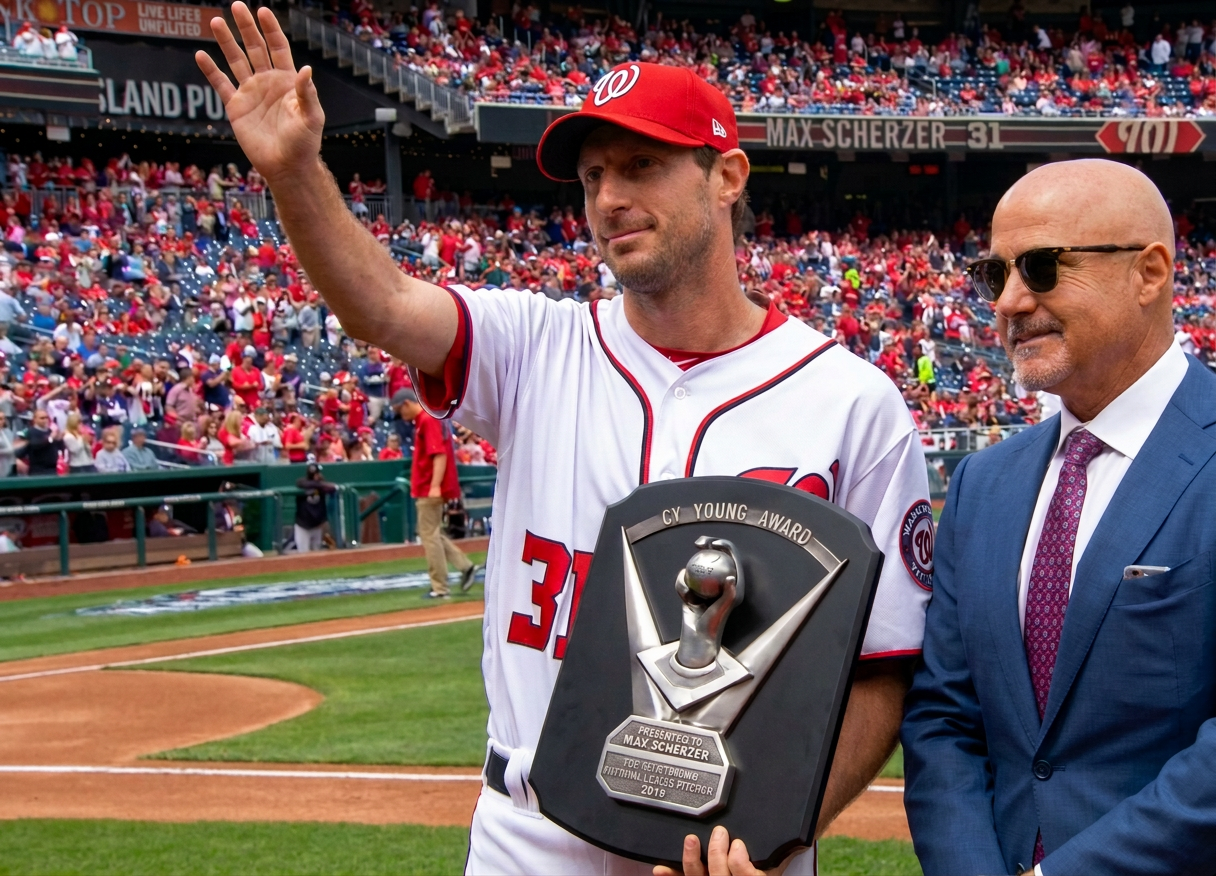
Photo by Sol Tucker for Talk DC Sports












Leave a Reply